
Conventional Wisdom for Contemporary Life
April 9, 1986: Nice day! John started disking set-aside acres on Roberta’s quarter. I did some yard work. Anthony here awhile in evening when kids went to play volleyball.
April 10, 1986: A super nice day, quiet & sunny. Guys put Treflan on set-aside acres on Roberta’s quarter and then began spreading fertilizer (liquid) with alfalfa seed in it; didn’t get finished with the seeding job. I had Anthony while the others went to men’s chorus and choir practice.
– Leona, Personal Journal
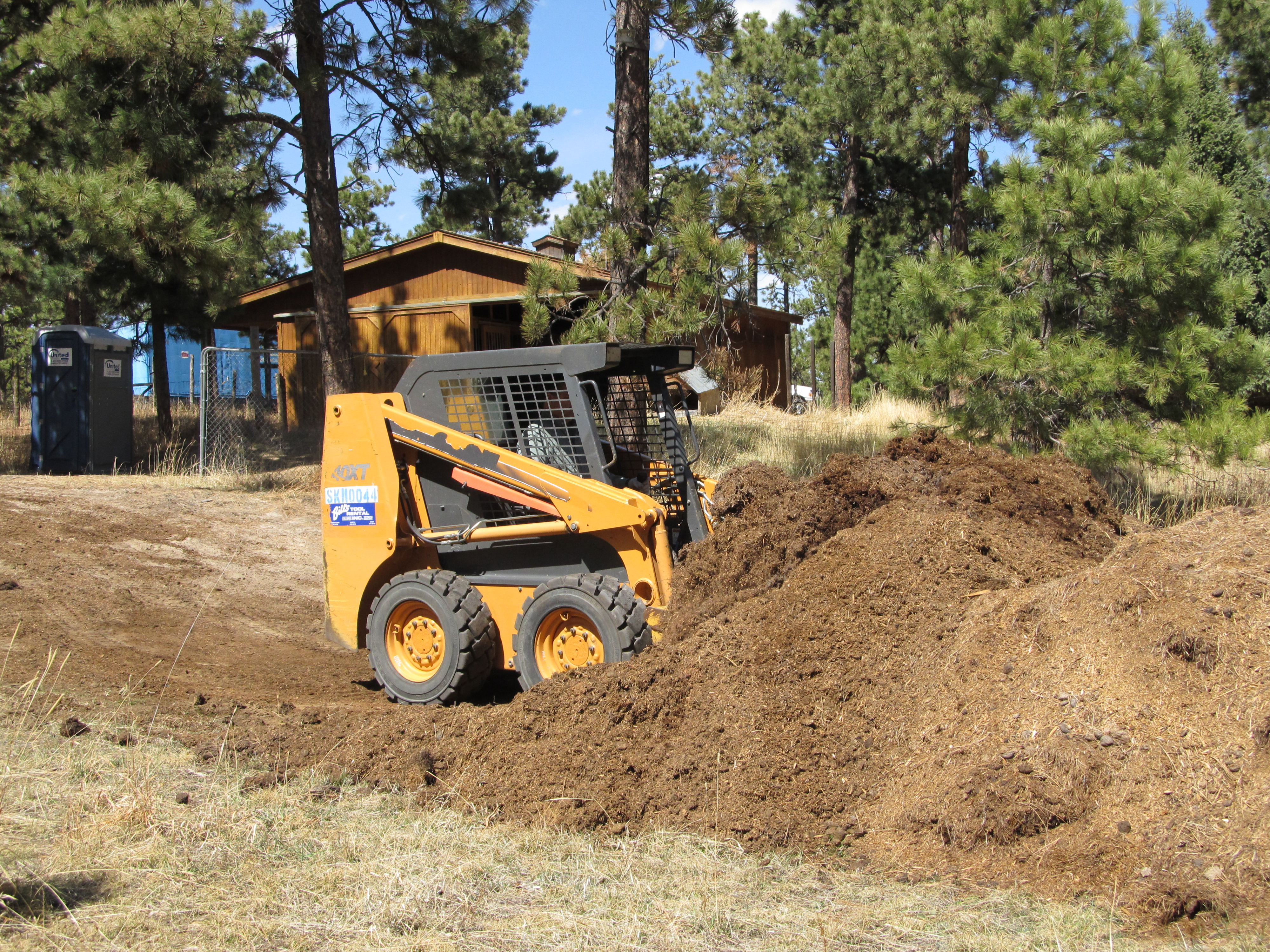
Jim Scooping Up Our Treasured Fertilizer
Why does it seem these Spring days are flying by significantly faster than those Winter days were? There is so much work to complete in order to have a successful crop in a few months! You can catch a glimpse of our farmers during nice, quiet, sunny Spring days in Leona’s journal. Disking, applying herbicide, fertilizing, and seeding – all going on within two days! Today Jim and I spread horse manure – composted, several years old horse manure – across our acreage. Since we live in a sandy, semi-arid forest, this aged horse manure is like spreading a layer of top soil across our yard. However, since we’re in the process of selling our house, we’ve discovered that not everyone is ready for living in the Black Forest. One offer we received included “horse manure will be removed” in their additional stipulations for purchase. Why would anyone request that something so valuable to the land be removed? Perhaps it’s because just the thought of “horse manure” creates negative connotations – smelly, disgusting, germ-infested connotations. And yet, every competent farmer recognizes the exceptional value of nutrient-rich land, as well as the many chores of Spring preparation.
Real life and relationships are similar in that there are certain components – we’re calling them Basic Skills – that are exceptionally valuable in preparing for success. Our first vital skill was the concept of boundaries, that is, knowing where your farming responsibilities actually begin and end. Our second skill is communication. It’s a little ironic that we are comparing horse manure with communication since we often dismiss verbiage from certain folks as “b.s.” The communication we’re discussing is that which provides rich nutrients for healthy, strong relationships and daily interactions. The comparison that I do want to make is that just like our prospective house buyer found little value in the horse manure, many individuals believe there to be little value in communication, particularly if the conversation needs to be difficult, emotional and involving conflict. It is these “smelly, disgusting” (to borrow adjectives from our manure description) and challenging conversations that generate the most life and profitable future. Certainly there are plenty of mundane conversations necessary for day-to-day life, but the difficult ones can’t be replaced or ignored in hopes of things just working out for the better.
Much has been written about the importance of conversation and effective communication skills. One caution addressed by Gregory D. Cash, President & CEO of Vasomedical, Inc., in The Way to the Top: The Best Business Advice I Ever Received (2004, Trump) is communicate with care. Cash specifies two guidelines including “The Size of the Canon” and “The 24-Hour Rule.” He indicates that one must bear in mind the position and influence a speaker has when communicating. Those with more influence come through with a bigger bang than those with less. Although he is referring to corporate hierarchy, the same is true in family life and in relationships. For example, a child can be significantly influenced by remarks – positive or negative – from his or her parent, while the same remarks from a stranger or peer may have little to no power.
“The 24-Hour Rule,” according to Cash, is to allow 24 hours before responding to any communication that generates an emotional response. In this day and age of “IM-ing,” texting and emails, this caution can save many foolish remarks, thus preserving relationships and employment. In a face-to-face conversation, delaying one’s response 24 hours may not be appropriate, but it certainly wouldn’t hurt to take some time to think and process before replying.
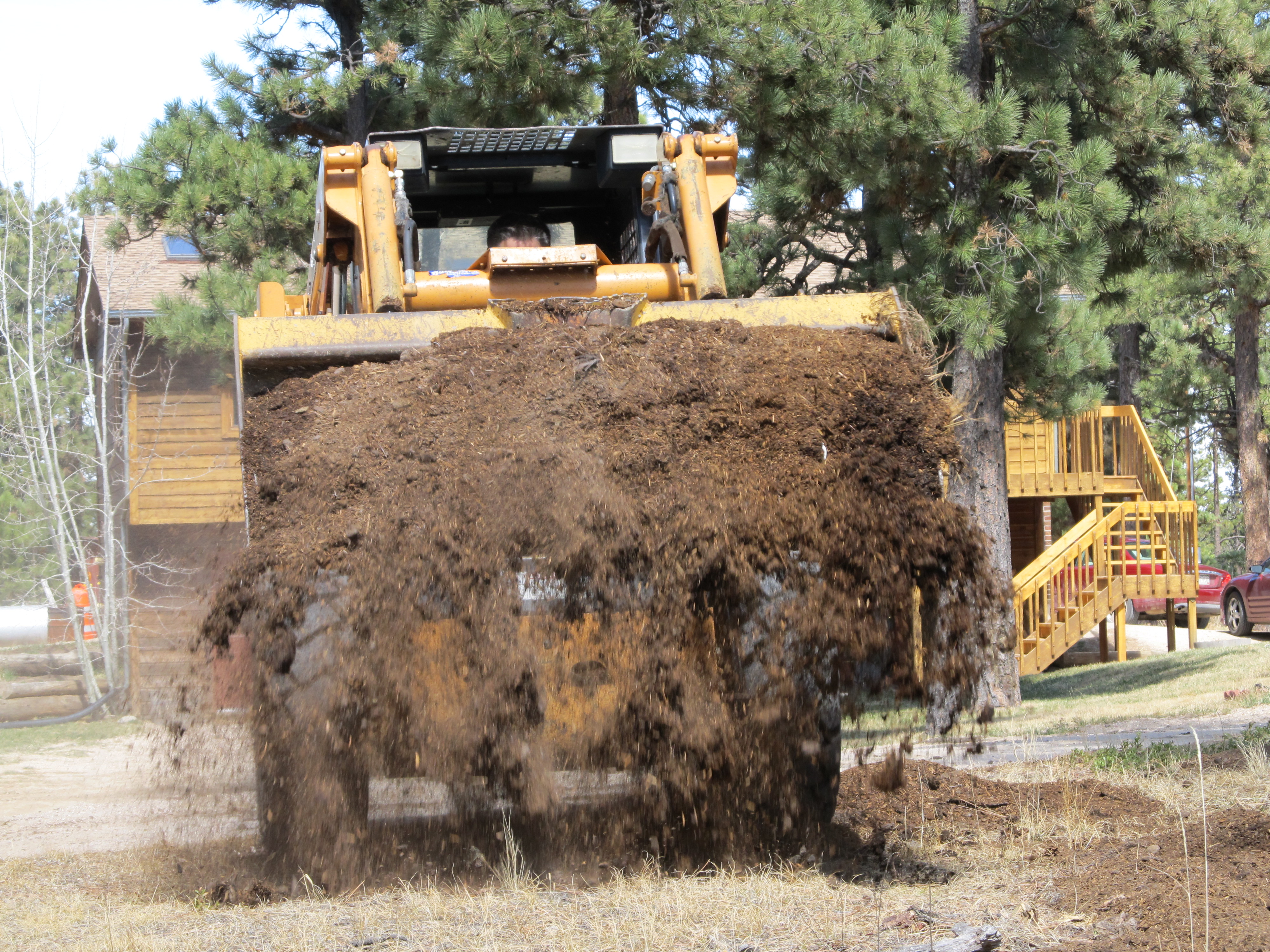
Planned Placement Yields the Best Results
All of the disking, fertilizing and seeding our farmers are busy completing must be performed within the appropriate boundaries and done with care. So, too, our communicating. Simply stated, some words can be spoken to certain people and not to others. If John or Jim were to just wildly disk wherever they wished, the coming crop would be damaged and the neighbors certainly maddened. Sometimes we carry on conversations – important, vital conversations – as if we can disk wherever we want, saying whatever we want, however we wish, in whatever manner suits our present mood. Then we wonder why the fence posts are ripped out of the ground, why people are angry with us, and why there’s such a mess everywhere. Or perhaps we spray the Treflan, a powerful herbicide, everywhere and then blame someone else that nothing grows in our field. An honest, accurate assessment is that we did not communicate with care. We gave not a single thought to wanting to have a harvest in a few months, a harvest of enjoyable holidays with our family or happy memories with our friends. We only thought that we “felt” like saying what we said and we were entitled to say whatever we wanted, however we pleased.

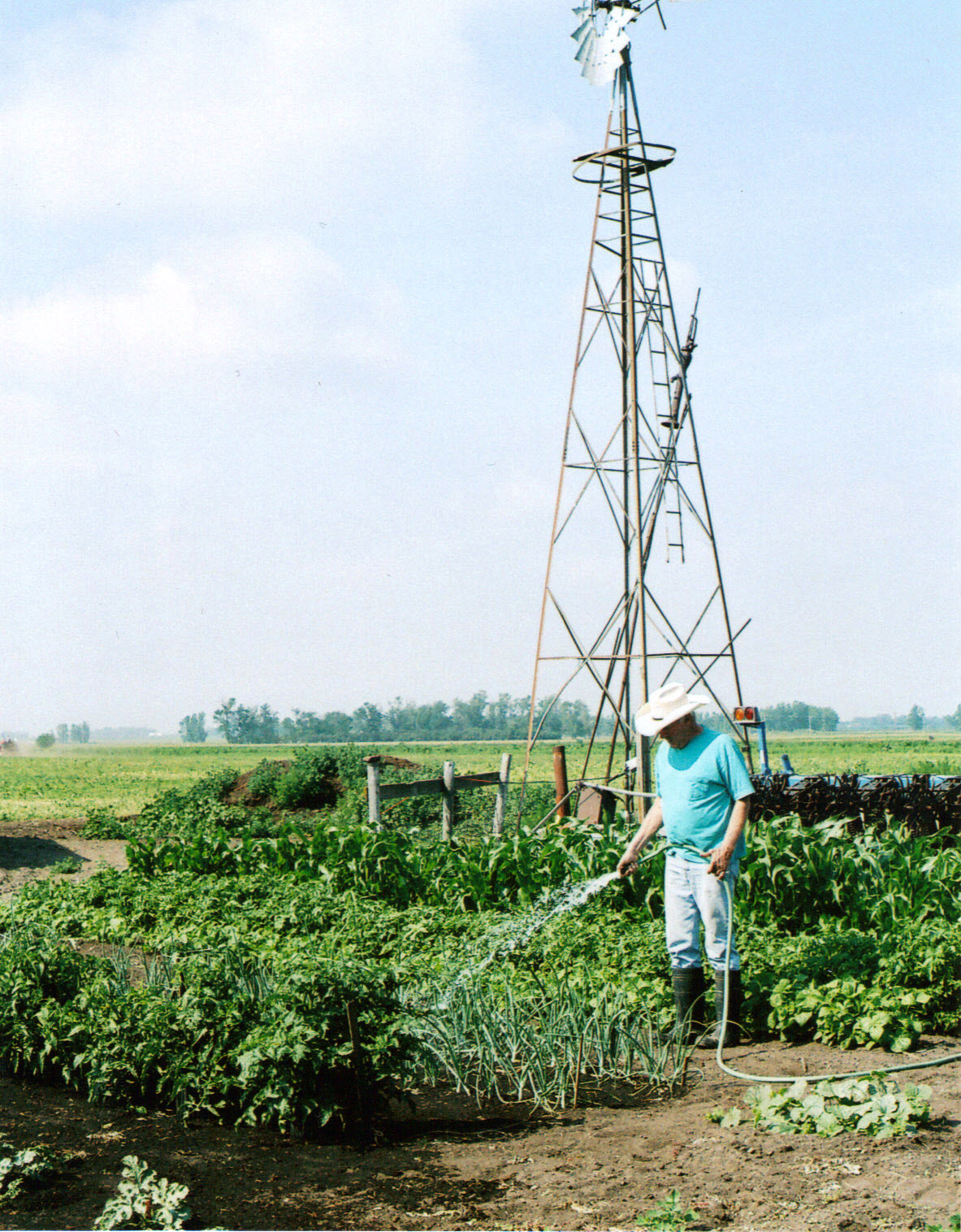
Remember Those Victory Gardens? Mine Gets Some Fertilizer -- And An Inspection by Buster!
If that’s how you choose to farm your land, you must be prepared for the ramifications of your decisions. However there are better ways to farm, much more effective means to prepare for a fruitful harvest. In my next blog, I’ll give you some “cheat sheets” for better communication. But for now, here is one helpful link to Communication Boundaries that will encourage you to communicate with care.
Grain of Truth: Keep your harvest goals in mind during these early days of spring preparation. Respect boundaries and communicate with care.



 Sessions International