January 11, 2024
Podcast Episode #1
https://podcasters.spotify.com/pod/show/karla9650/episodes/Build-a-Home-1-10-24-e2e8vdm

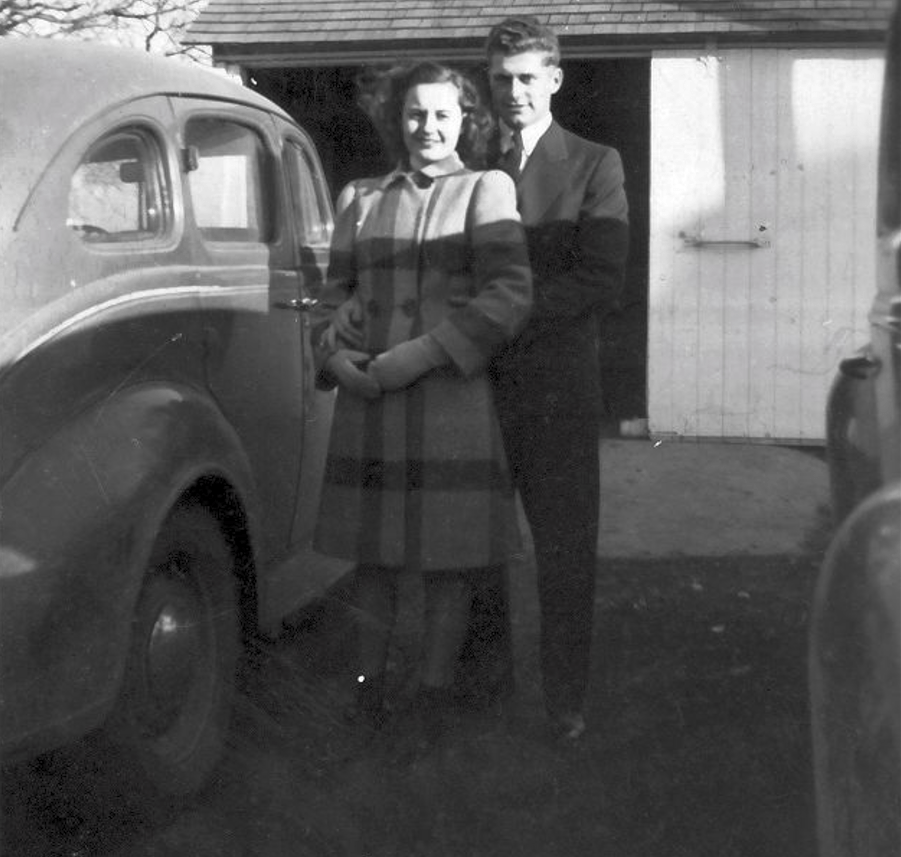

writing her journals and started building a house.
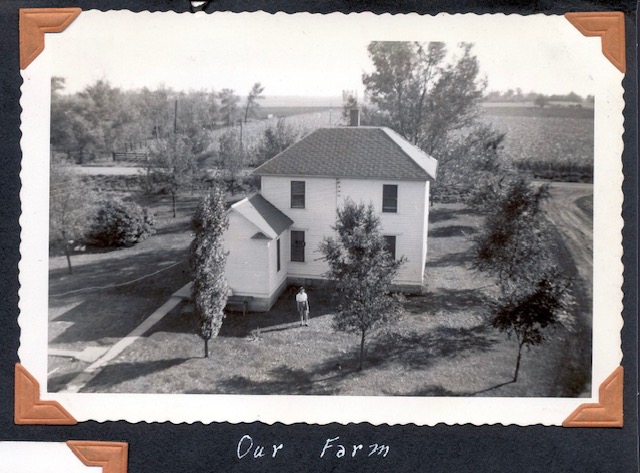
where she was raising her 5 children with
her farmer husband, John R.
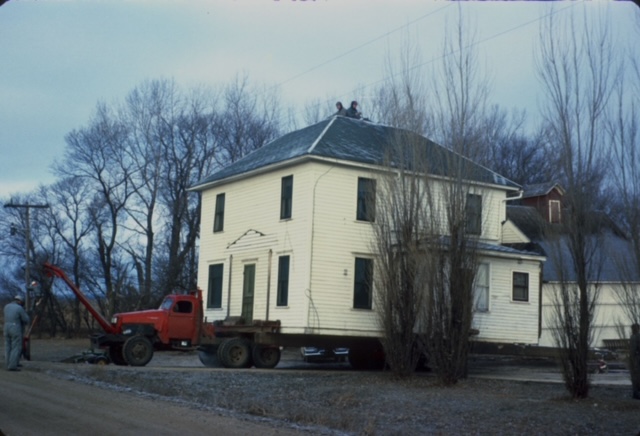

January 11, 2024
Podcast Episode #1
https://podcasters.spotify.com/pod/show/karla9650/episodes/Build-a-Home-1-10-24-e2e8vdm
Sessions with the Farmer’s Wife:
Conventional Wisdom for Contemporary Life
April 5, 2005: Partly sunny and the wind is still from the SE. Really warming up quickly. — Leona, Personal Journal
Have you been waiting around for 2 years for those “cheat sheets” for better communication that I promised? Wow! It’s hard to fathom that 2 entire years have passed since my last official blog! Let me try to catch you up on what’s been happening behind the scenes.

My 50th birthday was on St. Patrick’s Day. Well, actually all of my birthdays have been!
Last I posted, Anthony and Corinne had just gotten married, and Jim and I were in the throes of selling one house and buying another. That new house was a short sale which had been neglected for years. We spent months cleaning, scrubbing, painting, fixing, replacing…just to get it into livable condition. In that process, I burned out my arms and shoulders and was actually diagnosed with “overuse syndrome.” I am just now nearly fully recovered, after two years of physical therapy, chiropractic treatments, acupuncture, dry needling, muscle relaxers, pain relievers, exercise, and massage.
Three weeks after we moved, we had a big party at our new place celebrating Jozlyn’s high school graduation. We planted a garden, worked at getting settled, moved Andrea to a horse ranch and a new college, moved Jozlyn off to college — when it seemed we were already upon Thanksgiving and Christmas with lots of family and festivities going on. Andrea resigned her horse ranch job which meant moving back in with Mom and Dad and will be finishing up her business degree in a few weeks.

Monica said, “Yes!”
The morning of Marcus’ college graduation, he proposed to his lovely Monica. Marcus is an engineer in Texas and Monica is a kindergarten teacher in Texas, although not in the same city! They are looking forward to being married this June.

We gathered the whole gang at the beach for a few days!
We’ve also taken a couple family vacations together, made a few trips back and forth to Iowa to visit and care for our parents, and also made a couple trips to Alabama to hang out with Anthony and Corinne.
As if this hasn’t been enough, Jim and I both actually have jobs! Jim has been promoted to regional administrator and is now overseeing five home health care agencies from Pueblo, Colorado Springs, Denver, and up to Fort Collins. That’s a 3 hour drive from bottom to top, so he’s on the road more. I continue my private practice and have also launched Soul SafetyTM and created DVDs, a CD of my original songs, and some written resources to promote emotional well-being within faith communities. If this sounds interesting to you, you can check out www.soulsafety.com.
It seems that things have settled enough for me to get back to what we were doing here at Sessions, so let’s get going on Part 2 of Communicating with Care!

The 2012 fires were within view from our house. Good communication is imperative at a time like this!
When communicating, listening, rather than speaking, is oftentimes the bigger problem. No matter how well-spoken a person is, if the intended recipient does not listen well, communication does not happen. Many people interrupt, talk over, disqualify, ignore, or never even notice another person speaking to them. You’ve heard it said that many don’t hear what’s being said because they’re so busy formulating what they want to say to make their point. That doesn’t contribute to good listening and quality communication at all.
One of the best solutions to poor communication is called the Speaker-Listener Technique. With this approach, the Listener is not allowed to make his point until he has proven that he heard the Speaker by reflecting – accurately reflecting back to her what she said until she is satisfied that he is comprehending and understanding her point. At that time, the Listener becomes the Speaker and may make his point. While practicing this model of communication, it is very helpful for the person speaking (which is not always the Speaker), to hold an object that identifies that he or she has the floor. Some families have a Talking Stick, although any noticeable object would work. Additional rules of communication beneficial to any discussion are available at http://www.positive-way.com/family.htm. Although the slower pace of the Speaker-Listener Technique is frustrating for some, the benefits of slowing down the conversation, taking adequate time to be understood, and managing emotions that tend to escalate, far outweigh the previous manner of communicating which wasn’t really communication and oftentimes led to hours…days…weeks of hurt feelings and animosity between people.
An important aspect of this or any model of communicating is using “I Statements” or speaking for oneself. None of us actually knows what another person is thinking; we regularly have no idea what we’re thinking! Quality, effective communication requires that I take responsibility for my own thoughts and feelings, then endeavor to make them known outside of myself in an efficient manner. Here is fill-in-the-blank assistance to get you started:
I feel ____________
(when you do/do not __________)
because ____________
and I would like you to (stop) ____________.
If you give this a test run, I think you might be surprised what problems this little exercise solves, especially if you couple it with the Speaker-Listener Technique. I suspect it might prove to be like the south-east wind on a partially sunny April day that Leona mentions in her journal – things might really warm up quickly!

April 9, 1986: Nice day! John started disking set-aside acres on Roberta’s quarter. I did some yard work. Anthony here awhile in evening when kids went to play volleyball.
April 10, 1986: A super nice day, quiet & sunny. Guys put Treflan on set-aside acres on Roberta’s quarter and then began spreading fertilizer (liquid) with alfalfa seed in it; didn’t get finished with the seeding job. I had Anthony while the others went to men’s chorus and choir practice.
– Leona, Personal Journal
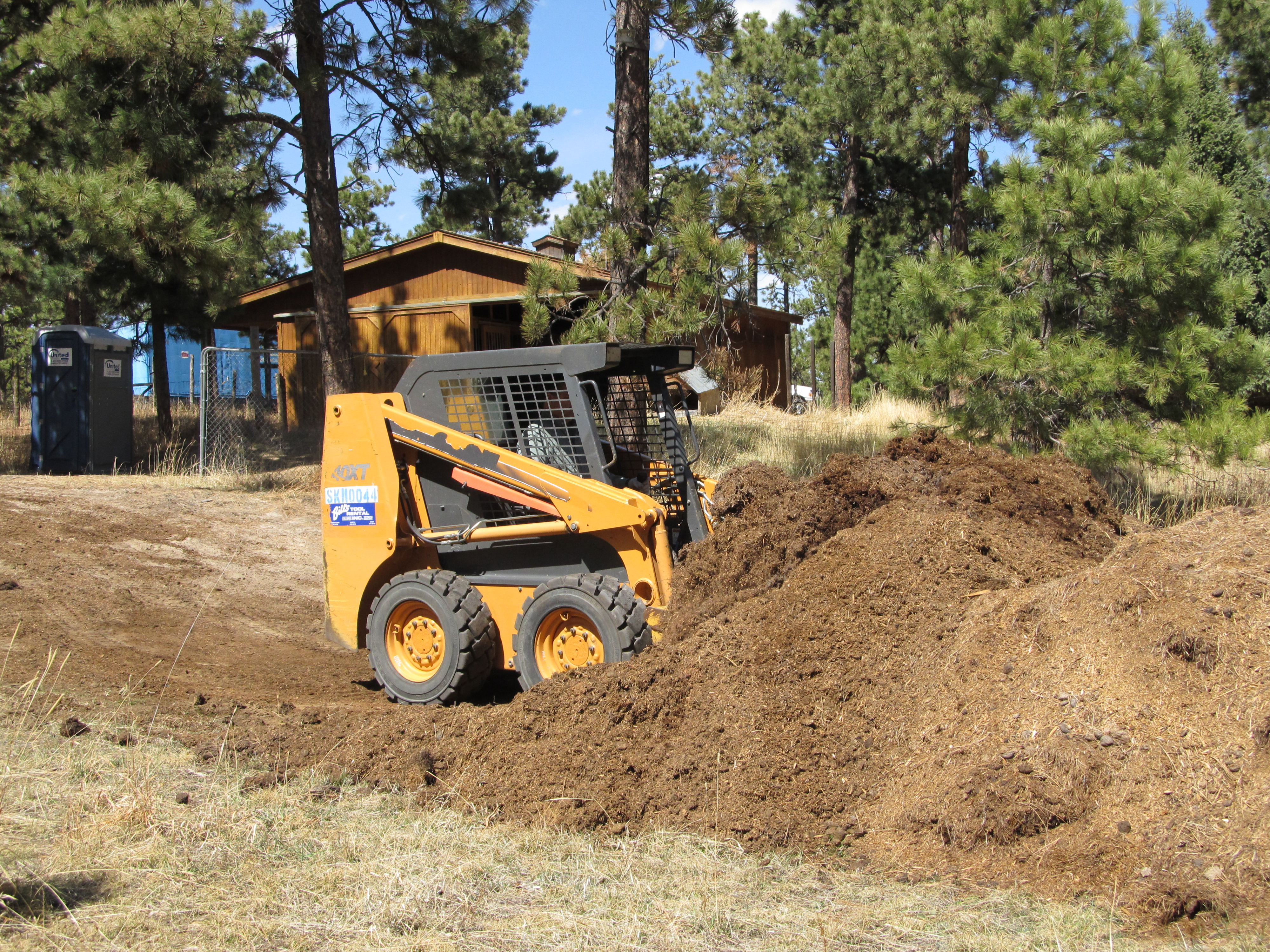
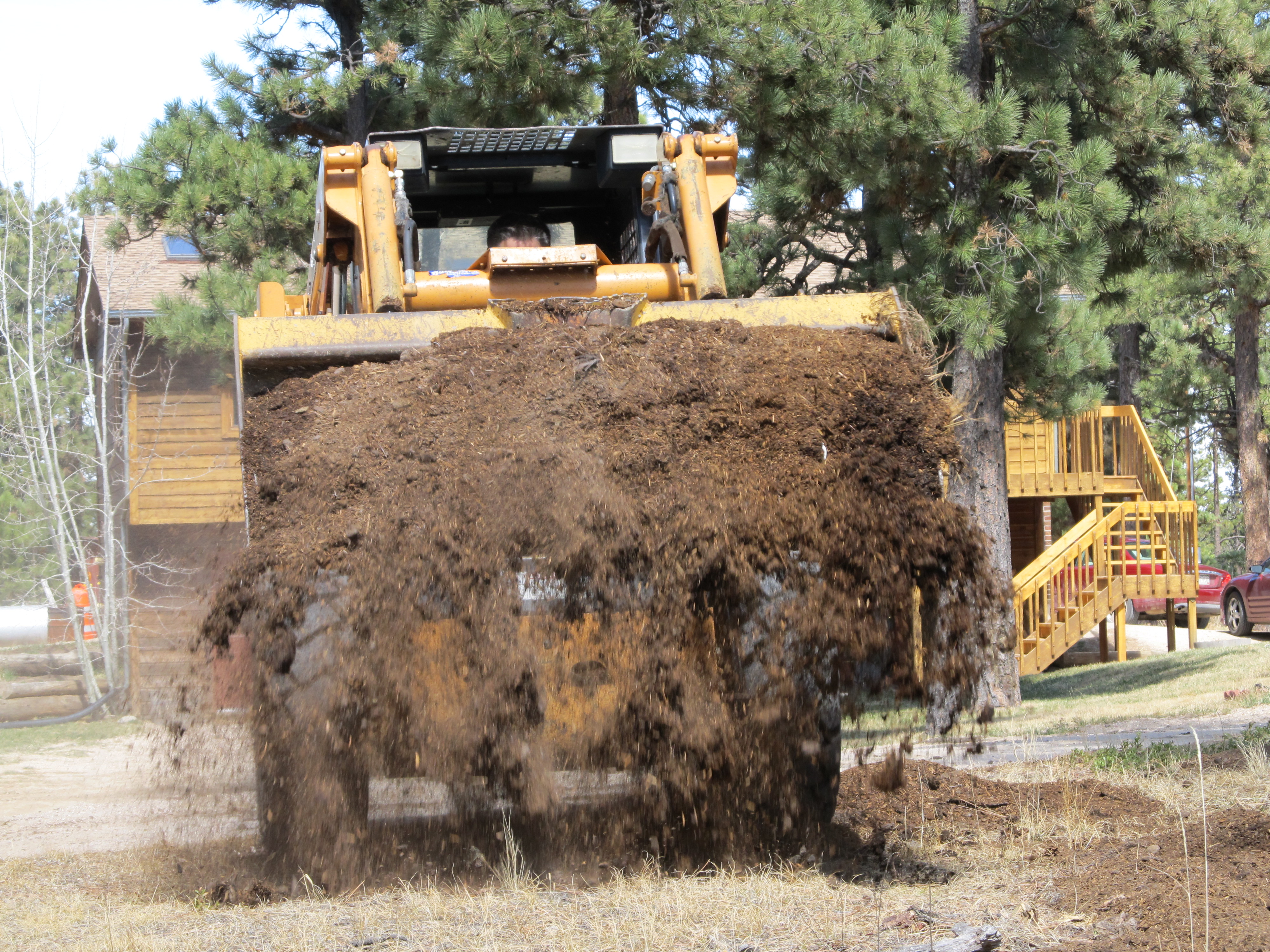
Jim Scooping Up Our Treasured Fertilizer
Why does it seem these Spring days are flying by significantly faster than those Winter days were? There is so much work to complete in order to have a successful crop in a few months! You can catch a glimpse of our farmers during nice, quiet, sunny Spring days in Leona’s journal. Disking, applying herbicide, fertilizing, and seeding – all going on within two days! Today Jim and I spread horse manure – composted, several years old horse manure – across our acreage. Since we live in a sandy, semi-arid forest, this aged horse manure is like spreading a layer of top soil across our yard. However, since we’re in the process of selling our house, we’ve discovered that not everyone is ready for living in the Black Forest. One offer we received included “horse manure will be removed” in their additional stipulations for purchase. Why would anyone request that something so valuable to the land be removed? Perhaps it’s because just the thought of “horse manure” creates negative connotations – smelly, disgusting, germ-infested connotations. And yet, every competent farmer recognizes the exceptional value of nutrient-rich land, as well as the many chores of Spring preparation.
Real life and relationships are similar in that there are certain components – we’re calling them Basic Skills – that are exceptionally valuable in preparing for success. Our first vital skill was the concept of boundaries, that is, knowing where your farming responsibilities actually begin and end. Our second skill is communication. It’s a little ironic that we are comparing horse manure with communication since we often dismiss verbiage from certain folks as “b.s.” The communication we’re discussing is that which provides rich nutrients for healthy, strong relationships and daily interactions. The comparison that I do want to make is that just like our prospective house buyer found little value in the horse manure, many individuals believe there to be little value in communication, particularly if the conversation needs to be difficult, emotional and involving conflict. It is these “smelly, disgusting” (to borrow adjectives from our manure description) and challenging conversations that generate the most life and profitable future. Certainly there are plenty of mundane conversations necessary for day-to-day life, but the difficult ones can’t be replaced or ignored in hopes of things just working out for the better.
Much has been written about the importance of conversation and effective communication skills. One caution addressed by Gregory D. Cash, President & CEO of Vasomedical, Inc., in The Way to the Top: The Best Business Advice I Ever Received (2004, Trump) is communicate with care. Cash specifies two guidelines including “The Size of the Canon” and “The 24-Hour Rule.” He indicates that one must bear in mind the position and influence a speaker has when communicating. Those with more influence come through with a bigger bang than those with less. Although he is referring to corporate hierarchy, the same is true in family life and in relationships. For example, a child can be significantly influenced by remarks – positive or negative – from his or her parent, while the same remarks from a stranger or peer may have little to no power.
“The 24-Hour Rule,” according to Cash, is to allow 24 hours before responding to any communication that generates an emotional response. In this day and age of “IM-ing,” texting and emails, this caution can save many foolish remarks, thus preserving relationships and employment. In a face-to-face conversation, delaying one’s response 24 hours may not be appropriate, but it certainly wouldn’t hurt to take some time to think and process before replying.
Planned Placement Yields the Best Results
All of the disking, fertilizing and seeding our farmers are busy completing must be performed within the appropriate boundaries and done with care. So, too, our communicating. Simply stated, some words can be spoken to certain people and not to others. If John or Jim were to just wildly disk wherever they wished, the coming crop would be damaged and the neighbors certainly maddened. Sometimes we carry on conversations – important, vital conversations – as if we can disk wherever we want, saying whatever we want, however we wish, in whatever manner suits our present mood. Then we wonder why the fence posts are ripped out of the ground, why people are angry with us, and why there’s such a mess everywhere. Or perhaps we spray the Treflan, a powerful herbicide, everywhere and then blame someone else that nothing grows in our field. An honest, accurate assessment is that we did not communicate with care. We gave not a single thought to wanting to have a harvest in a few months, a harvest of enjoyable holidays with our family or happy memories with our friends. We only thought that we “felt” like saying what we said and we were entitled to say whatever we wanted, however we pleased.

Remember Those Victory Gardens? Mine Gets Some Fertilizer -- And An Inspection by Buster!
If that’s how you choose to farm your land, you must be prepared for the ramifications of your decisions. However there are better ways to farm, much more effective means to prepare for a fruitful harvest. In my next blog, I’ll give you some “cheat sheets” for better communication. But for now, here is one helpful link to Communication Boundaries that will encourage you to communicate with care.
Grain of Truth: Keep your harvest goals in mind during these early days of spring preparation. Respect boundaries and communicate with care.

Sessions with the Farmer’s Wife:
Conventional Wisdom for Contemporary Life
March 31, 1988: Cloudy and windy. John & Jim measured some set aside acres. –Leona, personal journal
Often when a person discovers a new idea, he will take the idea and run with it, as they say – sometimes a little overboard. This is true of the discovery of the concept of boundaries. All of a sudden, “No one is going to walk all over me anymore!” or “I’m not letting anyone tell me what to do again!” While this type of response is just part of the learning process, it is important to mention that many times it is just fine to do what another person requests or even to not have an opinion about some situation. Another topic that has received a similar response throughout the mental well-being communities is the concept of “co-dependence.” Although co-dependence is a topic for another day, I present this link for your consideration regarding co-dependence and, if you can transpose the debate presented, boundaries. How the Co-dependency Movement is Ruining Marriages (Willard F. Harley, Jr.) http://www.marriagebuilders.com/graphic/mbi8110_cod.html
Remember that fences and boundaries can fluctuate and adjust, but first they must be established. Even Leona’s journal gives indication that the land boundaries were adjusting this year. “Set aside acres” were portions of a field that were not used for typical farming, but were “set aside” because of enrolling in a government subsidized program. (That sentence has hours of heated political debate and discussion rolled into it, but since that’s not our concern presently, I’ll let you Google “set aside acres” if you want to study or debate further.) In 1987, this same piece of ground may have grown corn or soybeans, but in 1988, things were different. Measurements needed to be made and new boundaries, perhaps even additional boundaries, needed to be set up.

A Buffalo Requires More Solid Boundaries
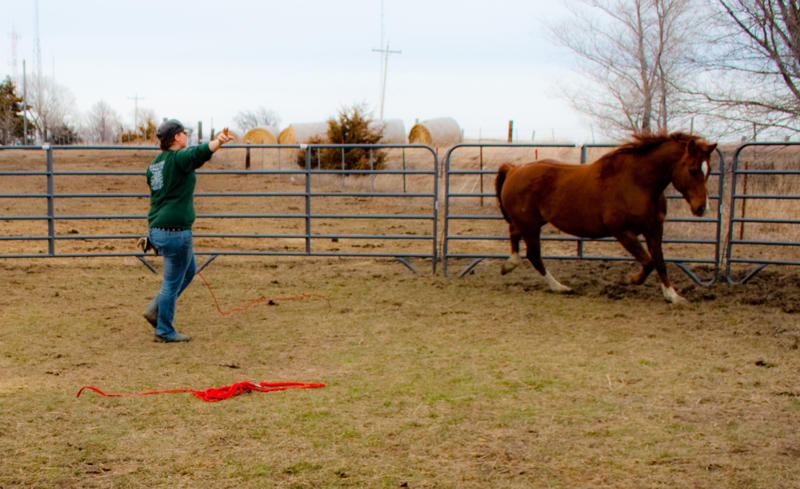
A Well-Trained Horse Respecting Fences
Boundaries in relationships work the same way; occasionally they need to be adjusted. Some folks are like the buffalo in this photo. Notice the strong fences that are built around him and his friends. That type of fence in relationships is created by knowing what we want and sticking to it, no matter what. The gate in this fence is solid and locked tight so no amount off fits and tantrums can break in any closer. If you have a buffalo in your relationships, you better build some strong limits. However, other folks are like a well-trained horse. The round pen in this photo could be knocked over rather quickly if there was an ornery, untrained animal corralled there. But for a person who knows her manners, knows where she ends and you begin, and knows what is or is not hers to influence, a less sturdy boundary with a gently swinging gate is sufficient. Such an analogy begs the question, Am I a buffalo or a well-trained horse?
A few months ago my psychologist sister, my girls and I attended a horse training seminar. I was surprised how many of the ideas taught could be directly transposed for use in relationships. I don’t mean that to sound at all insulting. I think the point to note is that sometimes we are better educated about relating to our animals than we are to the people in our worlds. I’ve never heard of an Obedience Class for Humans. Maybe we’re on to something here.

Relationships Require Training For Both Parties
None the less, there were four points that could be borrowed from the horse seminar and used directly here.
1. Identify Your Personal Space Need: An unruly horse that gets too close to a person is dangerous and potentially deadly.
2. Either Lack of Respect or Fear Causes All Problems: If you teach a horse to respect you and not be fearful, almost all problems will solve themselves.
3. Consistency vs. Inconsistency: A horse will learn it faster and more fluently if you are consistent about what you expect. Inconsistent expectations only confuse.
4. If Difficulties Arise, Deal with the Root Problem, Not the Symptoms: For example, if a horse is infringing on your personal space, he likely has not learned respect for you, which takes us directly back to Point #2.
Can you examine these on your own and translate them into relationships with humans?
Newly established boundaries can cause the new boundary-setter some angst. When you’re used to running rampant anywhere you want, butting up against a fence can upset any creature, usually causing chaos for whoever created the limitation. In order to make this transition as internally peaceful as possible, consider these Boundary Myths from Drs. Cloud and Townsend book, Boundaries. Remember: These are myths, thus, they are NOT TRUE. Each is followed by a tidbit of truth to encourage your newly found boundary-making.
Common Boundary Myths

Simple Fences Gladly Respected
1. If I Set Boundaries, I’m Being Selfish
* Our needs are our job; appropriate boundaries actually increase our ability to care about others.
2. Boundaries Area a Sign of Disobedience
* A Boundary is not a lack of submission, compassion or spiritual depth.
3. If I Begin Setting Boundaries, I Will Be Hurt by Others
* Boundaries are a “litmus test” for the quality of our relationships.
4. If I Set Boundaries, I Will Hurt Others
* Boundaries are not an offensive weapon; they are a defensive tool.
5. Boundaries Mean That I Am Angry
* Boundaries actually decrease anger.
6. When Others Set Boundaries, It Injures Me
* Inappropriate boundaries can injure us.
* An ability to accept others’ boundaries can indicate a problem in taking responsibility.
7. Boundaries Cause Feelings of Guilt
* Just because you receive something (love, money, time) does not mean you owe something.
8. Boundaries are Permanent, and I’m Afraid of Burning my Bridges
* Your ‘no’ is always subject to you.
* Even God negotiated and changed boundaries.

Peace & Safety for Mom & Baby
Although creating boundaries may be a difficult idea to establish, once they are, peace and safety are typical benefits. To investigate these ideas of boundaries further, grab a copy of Boundaries. Next time we’ll dig into the next Basic Skill of communication.
Grain of Truth: Healthy boundaries require effort to establish, but are well worth the challenge with the peace and safety they provide.
All Photos Compliments of Rambling Hearts Photography
 Sessions International