Basic Skills: #2 Communicate with Care (Part 1)

9 04 2011


Sessions with the Farmer’s Wife:
Conventional Wisdom for Contemporary Life

April 9, 1986: Nice day! John started disking set-aside acres on Roberta’s quarter.  I did some yard work.  Anthony here awhile in evening when kids went to play volleyball.
April 10, 1986: A super nice day, quiet & sunny. Guys put Treflan on set-aside acres on Roberta’s quarter and then began spreading fertilizer (liquid) with alfalfa seed in it; didn’t get finished with the seeding job. I had Anthony while the others went to men’s chorus and choir practice. 
                                                                             – Leona, Personal Journal
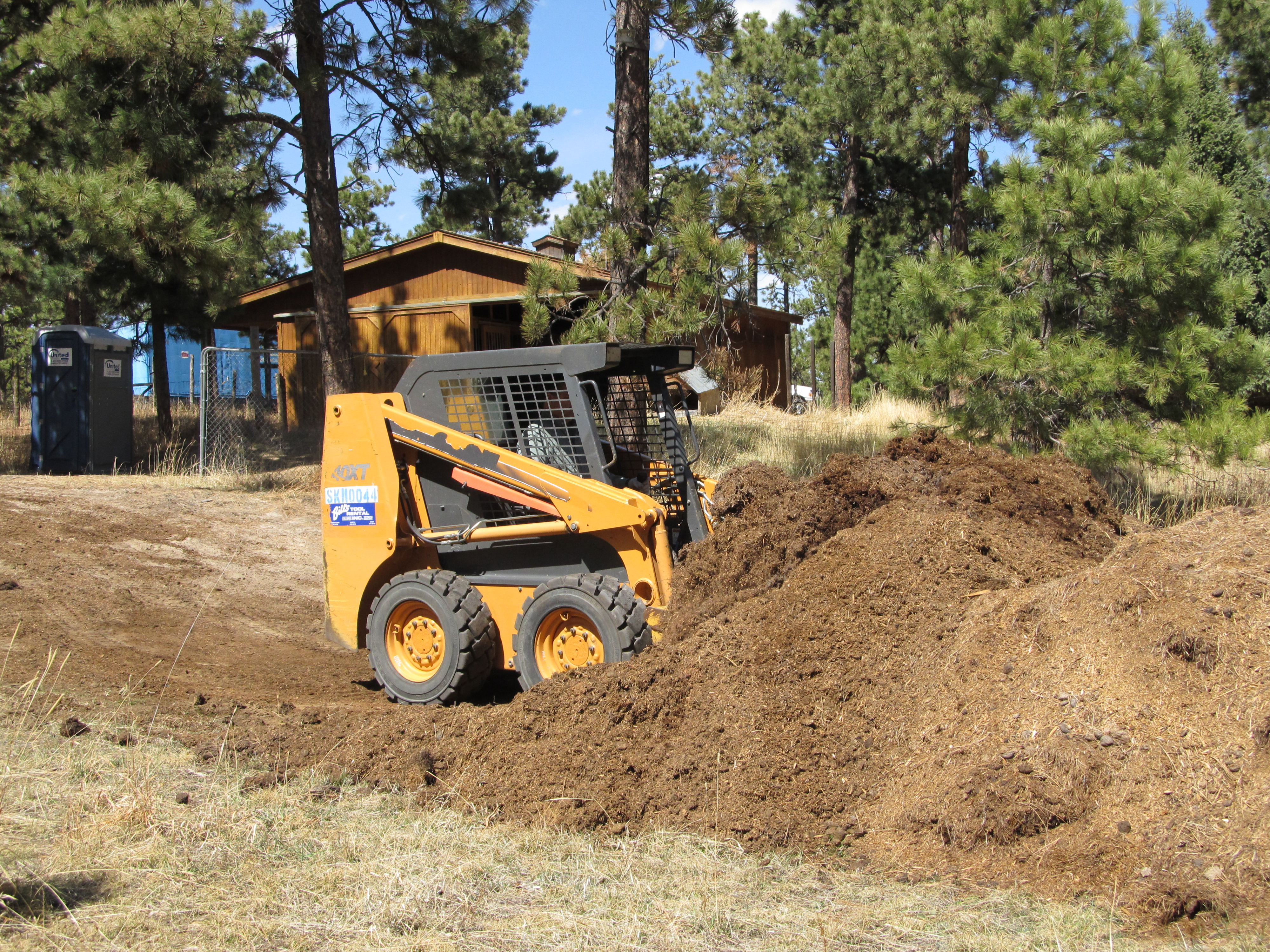
Jim Scooping Up Our Treasured Fertilizer

Why does it seem these Spring days are flying by significantly faster than those Winter days were?  There is so much work to complete in order to have a successful crop in a few months!  You can catch a glimpse of our farmers during nice, quiet, sunny Spring days in Leona’s journal.  Disking, applying herbicide, fertilizing, and seeding – all going on within two days!  Today Jim and I spread horse manure – composted, several years old horse manure – across our acreage.  Since we live in a sandy, semi-arid forest, this aged horse manure is like spreading a layer of top soil across our yard.  However, since we’re in the process of selling our house, we’ve discovered that not everyone is ready for living in the Black Forest.  One offer we received included “horse manure will be removed” in their additional stipulations for purchase.  Why would anyone request that something so valuable to the land be removed?  Perhaps it’s because just the thought of “horse manure” creates negative connotations – smelly, disgusting, germ-infested connotations.  And yet, every competent farmer recognizes the exceptional value of nutrient-rich land, as well as the many chores of Spring preparation.

Real life and relationships are similar in that there are certain components – we’re calling them Basic Skills – that are exceptionally valuable in preparing for success.  Our first vital skill was the concept of boundaries, that is, knowing where your farming responsibilities actually begin and end.  Our second skill is communication.  It’s a little ironic that we are comparing horse manure with communication since we often dismiss verbiage from certain folks as “b.s.”  The communication we’re discussing is that which provides rich nutrients for healthy, strong relationships and daily interactions.  The comparison that I do want to make is that just like our prospective house buyer found little value in the horse manure, many individuals believe there to be little value in communication, particularly if the conversation needs to be difficult, emotional and involving conflict.  It is these “smelly, disgusting” (to borrow adjectives from our manure description) and challenging conversations that generate the most life and profitable future.  Certainly there are plenty of mundane conversations necessary for day-to-day life, but the difficult ones can’t be replaced or ignored in hopes of things just working out for the better.

Much has been written about the importance of conversation and effective communication skills.   One caution addressed by Gregory D. Cash, President & CEO of Vasomedical, Inc., in The Way to the Top: The Best Business Advice I Ever Received (2004, Trump) is communicate with care.  Cash specifies two guidelines including “The Size of the Canon” and “The 24-Hour Rule.”  He indicates that one must bear in mind the position and influence a speaker has when communicating.  Those with more influence come through with a bigger bang than those with less.  Although he is referring to corporate hierarchy, the same is true in family life and in relationships.  For example, a child can be significantly influenced by remarks – positive or negative – from his or her parent, while the same remarks from a stranger or peer may have little to no power.

“The 24-Hour Rule,” according to Cash, is to allow 24 hours before responding to any communication that generates an emotional response.  In this day and age of “IM-ing,” texting and emails, this caution can save many foolish remarks, thus preserving relationships and employment.  In a face-to-face conversation, delaying one’s response 24 hours may not be appropriate, but it certainly wouldn’t hurt to take some time to think and process before replying.
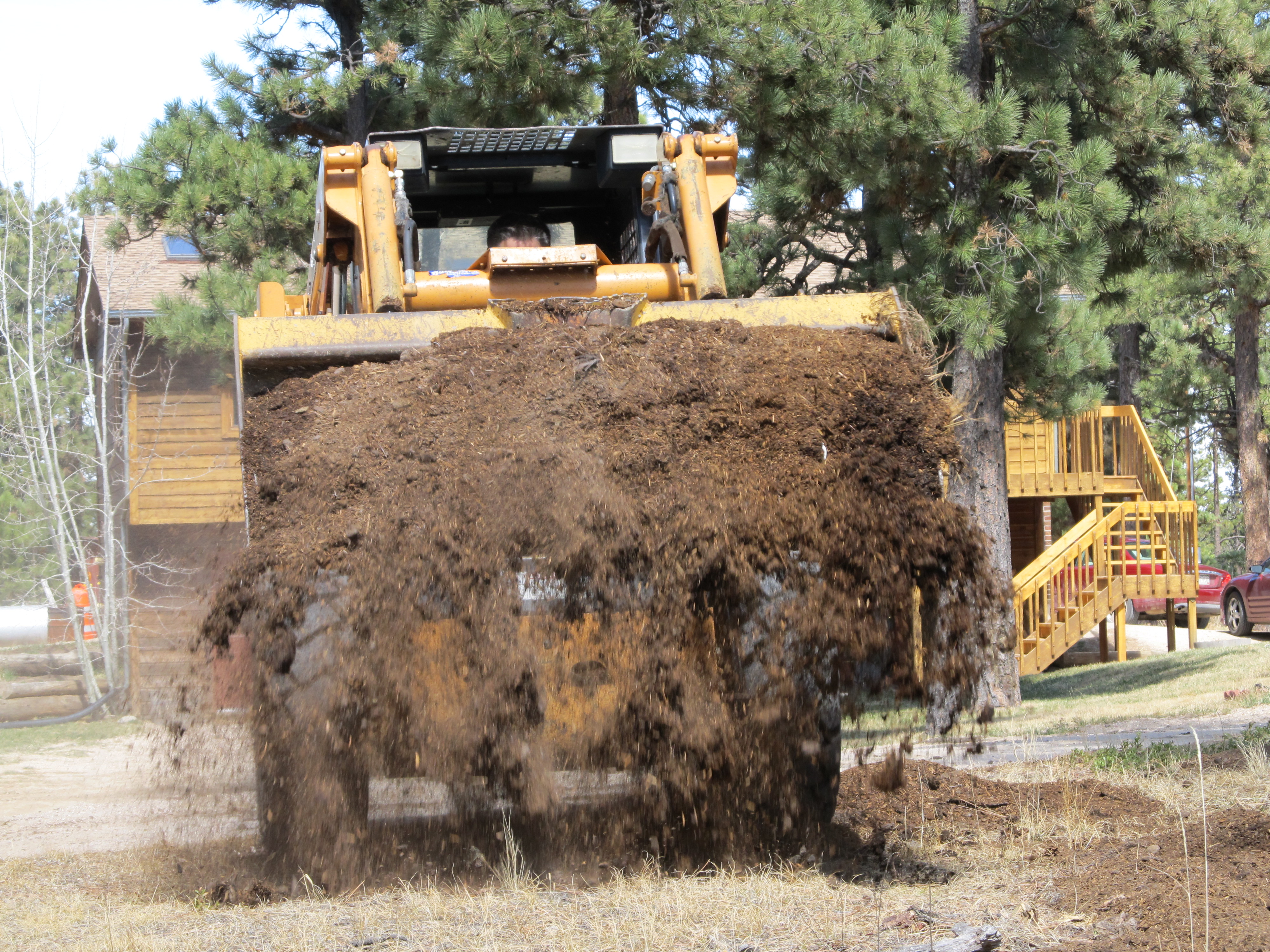
Planned Placement Yields the Best Results

All of the disking, fertilizing and seeding our farmers are busy completing must be performed within the appropriate boundaries and done with care.  So, too, our communicating.  Simply stated, some words can be spoken to certain people and not to others.  If John or Jim were to just wildly disk wherever they wished, the coming crop would be damaged and the neighbors certainly maddened.  Sometimes we carry on conversations – important, vital conversations – as if we can disk wherever we want, saying whatever we want, however we wish, in whatever manner suits our present mood.  Then we wonder why the fence posts are ripped out of the ground, why people are angry with us, and why there’s such a mess everywhere.  Or perhaps we spray the Treflan, a powerful herbicide, everywhere and then blame someone else that nothing grows in our field.  An honest, accurate assessment is that we did not communicate with care.  We gave not a single thought to wanting to have a harvest in a few months, a harvest of enjoyable holidays with our family or happy memories with our friends.  We only thought that we “felt” like saying what we said and we were entitled to say whatever we wanted, however we pleased.

Remember Those Victory Gardens? Mine Gets Some Fertilizer -- And An Inspection by Buster!

If that’s how you choose to farm your land, you must be prepared for the ramifications of your decisions.  However there are better ways to farm, much more effective means to prepare for a fruitful harvest.  In my next blog, I’ll give you some “cheat sheets” for better communication.  But for now, here is one helpful link to Communication Boundaries that will encourage you to communicate with care.

Grain of Truth: Keep your harvest goals in mind during these early days of spring preparation.  Respect boundaries and communicate with care.


Basic Skills: #1 Respecting Fences (Part 2)

31 03 2011


Sessions with the Farmer’s Wife:
Conventional Wisdom for Contemporary Life

March 31, 1988: Cloudy and windy.  John & Jim measured some set aside acres.                                                    –Leona, personal journal

Often when a person discovers a new idea, he will take the idea and run with it, as they say – sometimes a little overboard.  This is true of the discovery of the concept of boundaries.  All of a sudden, “No one is going to walk all over me anymore!” or “I’m not letting anyone tell me what to do again!”  While this type of response is just part of the learning process, it is important to mention that many times it is just fine to do what another person requests or even to not have an opinion about some situation.  Another topic that has received a similar response throughout the mental well-being communities is the concept of “co-dependence.”  Although co-dependence is a topic for another day, I present this link for your consideration regarding co-dependence and, if you can transpose the debate presented, boundaries.  How the Co-dependency Movement is Ruining Marriages (Willard F. Harley, Jr.)  http://www.marriagebuilders.com/graphic/mbi8110_cod.html

Remember that fences and boundaries can fluctuate and adjust, but first they must be established.  Even Leona’s journal gives indication that the land boundaries were adjusting this year.  “Set aside acres” were portions of a field that were not used for typical farming, but were “set aside” because of enrolling in a government subsidized program.  (That sentence has hours of heated political debate and discussion rolled into it, but since that’s not our concern presently, I’ll let you Google “set aside acres” if you want to study or debate further.)  In 1987, this same piece of ground may have grown corn or soybeans, but in 1988, things were different.  Measurements needed to be made and new boundaries, perhaps even additional boundaries, needed to be set up.

A Buffalo Requires More Solid Boundaries

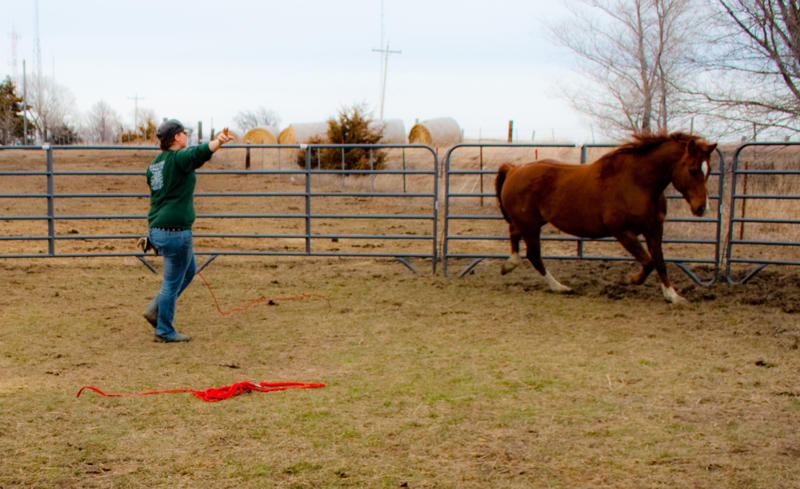
A Well-Trained Horse Respecting Fences

Boundaries in relationships work the same way; occasionally they need to be adjusted.  Some folks are like the buffalo in this photo.  Notice the strong fences that are built around him and his friends.  That type of fence in relationships is created by knowing what we want and sticking to it, no matter what.  The gate in this fence is solid and locked tight so no amount off fits and tantrums can break in any closer.  If you have a buffalo in your relationships, you better build some strong limits.  However, other folks are like a well-trained horse.  The round pen in this photo could be knocked over rather quickly if there was an ornery, untrained animal corralled there.  But for a person who knows her manners, knows where she ends and you begin, and knows what is or is not hers to influence, a less sturdy boundary with a gently swinging gate is sufficient.  Such an analogy begs the question, Am I a buffalo or a well-trained horse?

A few months ago my psychologist sister, my girls and I attended a horse training seminar.  I was surprised how many of the ideas taught could be directly transposed for use in relationships.  I don’t mean that to sound at all insulting.  I think the point to note is that sometimes we are better educated about relating to our animals than we are to the people in our worlds.  I’ve never heard of an Obedience Class for Humans.  Maybe we’re on to something here.

Relationships Require Training For Both Parties

None the less, there were four points that could be borrowed from the horse seminar and used directly here.
1. Identify Your Personal Space Need:  An unruly horse that gets too close to a person is dangerous and potentially deadly.
2. Either Lack of Respect or Fear Causes All Problems:  If you teach a horse to respect you and not be fearful, almost all problems will solve themselves.
3.  Consistency vs. Inconsistency:  A horse will learn it faster and more fluently if you are consistent about what you expect.  Inconsistent expectations only confuse.
4.  If Difficulties Arise, Deal with the Root Problem, Not the Symptoms:  For example, if a horse is infringing on your personal space, he likely has not learned respect for you, which takes us directly back to Point #2.

Can you examine these on your own and translate them into relationships with humans?

Newly established boundaries can cause the new boundary-setter some angst.  When you’re used to running rampant anywhere you want, butting up against a fence can upset any creature, usually causing chaos for whoever created the limitation.  In order to make this transition as internally peaceful as possible, consider these Boundary Myths from Drs. Cloud and Townsend book, Boundaries.  Remember: These are myths, thus, they are NOT TRUE.  Each is followed by a tidbit of truth to encourage your newly found boundary-making.

Common Boundary Myths

Simple Fences Gladly Respected

1. If I Set Boundaries, I’m Being Selfish
* Our needs are our job; appropriate boundaries actually increase our ability to care about others.
2. Boundaries Area a Sign of Disobedience
* A Boundary is not a lack of submission, compassion or spiritual depth.
3. If I Begin Setting Boundaries, I Will Be Hurt by Others
* Boundaries are a “litmus test” for the quality of our relationships.
4. If I Set Boundaries, I Will Hurt Others
* Boundaries are not an offensive weapon; they are a defensive tool.
5. Boundaries Mean That I Am Angry
* Boundaries actually decrease anger.
6. When Others Set Boundaries, It Injures Me
* Inappropriate boundaries can injure us.
* An ability to accept others’ boundaries can indicate a problem in taking responsibility.
7.  Boundaries Cause Feelings of Guilt
* Just because you receive something (love, money, time) does not mean you owe something.
8. Boundaries are Permanent, and I’m Afraid of Burning my Bridges
* Your ‘no’ is always subject to you.
* Even God negotiated and changed boundaries.

Peace & Safety for Mom & Baby

Although creating boundaries may be a difficult idea to establish, once they are, peace and safety are typical benefits.  To investigate these ideas of boundaries further, grab a copy of Boundaries.  Next time we’ll dig into the next Basic Skill of communication.

Grain of Truth: Healthy boundaries require effort to establish, but are well worth the challenge with the peace and safety they provide.

All Photos Compliments of Rambling Hearts Photography


Basic Skills: Respecting Fences (Part 1)

27 03 2011


Sessions with the Farmer’s Wife:
Conventional Wisdom for Contemporary Life

March 26, 1981: John worked Ellerbroek quarter & then moved to Callenius land south of highway.  Jim had early jazz band practice & then came home to run some errands for John & help unload some seed beans.             – Leona, Personal Journal

Why do generic photos elicit such strong memories & emotions?

Every year I was in elementary school we were required to take a standardized test called the Iowa Tests of Basic Skills.  With a title like that, it’s no mystery what the purpose of the tests was – to see how competent students were at what was (and still is) considered basic skills of education.  Today we begin a series of what I deem to be the basic skills of life.  Lack of knowledge, understanding or performance of one or more of these foundational concepts is what oftentimes introduces me to my clients.  Just like knowledge is far more complex than what was assessed on the ITBS, living life well is far more complicated than just these ideas.  However, if you gain proficiently in these basic skills, many aspects of life are much easier than they would be without that ability.

Today’s concept number one is what is commonly referred to as boundaries.  Boundary issues get us into all sorts of confusing and convoluted conversations, conditions and circumstances.  Perhaps the best resource for this discussion is the book Boundaries (2001) by Drs. Henry Cloud and John Townsend.  They state, “Boundaries define us.  They define what is me and what is not me.  A boundary shows me where I end and someone else beings, leading me to a sense of ownership.”  A simple farm analogy is the fence.  Fences do the exact same for farmers that boundaries do for individuals.  As you can see in Leona’s entry, John was driving his farm equipment around two pieces of land that are named, have location, and have specific dimensions.  Although this entry is from 1981, I guarantee you that we could travel to northwest Iowa this afternoon and find these exact same tracts of land.  Even if the fences are different or gone, the boundaries are exactly the same – 30 years later.

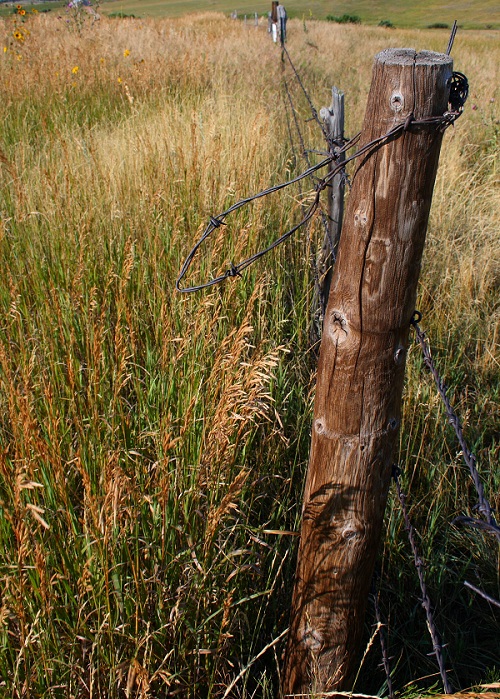
This Old Fence Still Makes Its Intentions Known

Here are a few principles to take away from this farming analogy:
1)  The fence line – or boundary – gives definition as to where the farmer is supposed to be, where his farm begins and ends.
2)  The fence line provides freedom for the farmer to do what he wants with his own land.
3)  The fence line provides safety and security since government and legal entities will intervene if anyone violates the farmer’s land.
4)  The fence line encourages responsibility by the farmer for his land to select seeds, fertilizer, herbicides, tillage, weed treatment and many other options for his crop.  He has the right to do nothing or something else with his land, as long as his choices don’t violate land regulations and zoning.
5)  The fence line prevents encroachment attempts and disputes, thus providing peaceful farming.
6)  Peaceful farmers encourage a safer, more strongly connected community.
7)  Fence lines provide some protection for our land and our crops.  Driving across a section of land isn’t such a great idea once you run into a fence.
8)  If the farmer wants someone else on the land, he can either open the gate for them or give them permission to be on his land.

What other principles can you assimilate from this farming analogy of fences?  I encourage you to go back through this list and read them one by one, then make the translation from the farming idea to your life.  For example, #1: The fence line gives definition as to where the farmer is supposed to be, where his farm begins and ends.  Are you aware, as an individual, where you are, where you begin and where you end?  Are you aware of who you are not and who is not you?  If not, I expect you are telling someone else how to live their life while you pay very little attention to how you are living your own life.  Or, perhaps someone else is telling you how to live your life and you take no responsibility for your own existence.  Your fences are down; you need to take some measurements and rebuild them.

While some fields have strong solid fences, occasionally more secure than what a corn field really requires, a lot of fields have no fences at all.  These are both boundary concerns.  One has too many limitations; the other doesn’t have enough.  Cloud and Townsend identify four types of boundary problems:

1. Compliants: These folks say “yes” to the bad; their gate swings open to everything. Often because of the fears related to saying, “No,” Complaints suffer much turmoil.  Once they are given permission to express their disagreement or dislike, Compliants can gain possession of their personal property – their own life!
2. Avoidants: A brick wall approach creates the opposite issue, saying “No” to the good!  Avoidants don’t let anyone in to their life. They may be unable to ask for help or to recognize their own needs.  Avoidant behavior is often taught through the example of parents or learned as a survival skill from an abusive life.
3. Controllers: These people have an opinion about everything and intend to have everyone know and follow their preference.  You can scream, “NO!” at a Controller, and he or she will just keep right on as if you never made a sound.  Somehow, they are responsible for everyone’s life – everyone’s but their own!
4. Nonresponsives: A Nonresponsive cannot hear, see or accept the needs of anyone else.  They tend to be completely self-absorbed with no intention of realizing or succumbing to the wishes of anyone else.  They don’t need you to do anything; just don’t bother them with your “trivial” preferences or problems.

My Flowers are Doing Their Best to Work with Spring!

There are a couple more ideas I’d like to present before we move on to the next basic skill, but this is plenty to chew on for today.  Take some time to go back through these ideas.  I expect everyone has a boundary issue of some sort in his/her life at one time or another.  How does all of this relate to you, your life, your relationships?  Are you a “boundary problem”?  If so, it’s a great time to get these fence lines measured out.  That’s what early Spring is all about – getting everything in line so we can do our best to sow a bumper crop this year!

Grain of Truth:  Boundaries define what is me and what is not me.  A boundary shows me where I end and someone else beings, leading me to a sense of ownership.


Seasons with Strength

21 12 2010

Sessions with the Farmer’s Wife:
Conventional Wisdom for Contemporary Life

December 2, 2005: Only 2 degrees this morning. Shortly after noon I went out to shovel snow off the front driveway. It had been snowing for a while and it was beginning to blow more. I had wanted to go to town but thought it not wise. Snow continued all afternoon.  – Leona, Personal Journal

Jim, Me & Our Yahoos

I want to discuss this Victory Garden of Life idea further, but let’s do that a little later on.  Right now, it’s winter on the farm, which is something I don’t want you to miss out on.  In my real-time life, I presently live a pseudo-city routine as a Licensed Professional Counselor in Colorado Springs.  My husband Jim is an Administrator of a home health care agency, and our 4 children — Anthony, Marcus, Andrea and Jozlyn – are old enough to motate themselves around life and even get married in March.  We officially moved from our family farm in 1997, but have continued to wander back-and-forth there for work and play throughout the years.  In order to remind me of the day-by-day activities of farm life, my mother-in-law graciously loaned me her yearly journals that have brief, yet valuable, remarks about each day’s events since as early as 1965.  I have a dozen years’ worth of entries – sessions with another true farmer’s wife – in my possession and will include one in the opening of each blog, just as I did today.  My purpose in doing so is to add authentic agricultural ambience to these reflections and, as I said, right now – it’s winter on the Iowa farm.

No Fieldwork Today

Winter is a curious season of life. Have you ever really looked at the deciduous trees during the winter months, how about the garden remains or the frozen tundra once known as a bean field?  Be honest now, if you didn’t have years of experience with winter turning to spring, would you really expect these brown, barren twigs to ever show signs of life again?  If you stepped onto a snow-covered field – especially during a mighty blizzard — with no knowledge of the seasons of farming, could you seriously recommend that a person invest an entire year’s wages on the bet that something will grow there?  It’s preposterous.

Winter Season

Winter comes in our personal lives, too.  Most often, we interfere with winters.  We don’t allow the cold, barren days, weeks and months to even exist.  We somehow think every day must be a hot, humid July day that grows the corn tall and full.  That must be true success!  But it’s not so.  When we try to work in cold, hard, frozen ground, we bust our equipment on that solid tundra.  We return to The Yard (which is the where the farmer lives and stores all of his farm equipment, supplies and family), frustrated and disappointed because nothing worked like we planned.

Leona’s entry today is a perfect example of this idea.  She had a plan.  But Winter had a plan that was bigger than hers.  She could have frankly said, “I planned to go to town (which is an event where The Farmer’s Wife drives several miles to a populated area in order to gather groceries and “run” all of her errands), and I will indeed go to town!”  But she “thought it not wise”; she has lived with Winter long enough to know that Winter is bigger than she is and sometimes it is best to work with the elements and not try to defy them.  Wisdom understands and respects the seasons, a skill that promotes mental health and adds strength to living.

Grain of Truth: Embrace winter (or any season of life for that matter) for a season with strength.