Basic Skills: #2 Communicate with Care (Part 2)

5 04 2013

Sessions with the Farmer’s Wife:
Conventional Wisdom for Contemporary Life

April 5, 2005: Partly sunny and the wind is still from the SE. Really warming up quickly.                                              — Leona, Personal Journal

Have you been waiting around for 2 years for those “cheat sheets” for better communication that I promised? Wow! It’s hard to fathom that 2 entire years have passed since my last official blog! Let me try to catch you up on what’s been happening behind the scenes.

My 50th birthday was on St. Patrick's Day. Well, actually all of my birthdays have been!

My 50th birthday was on St. Patrick’s Day. Well, actually all of my birthdays have been!

Last I posted, Anthony and Corinne had just gotten married, and Jim and I were in the throes of selling one house and buying another. That new house was a short sale which had been neglected for years. We spent months cleaning, scrubbing, painting, fixing, replacing…just to get it into livable condition. In that process, I burned out my arms and shoulders and was actually diagnosed with “overuse syndrome.” I am just now nearly fully recovered, after two years of physical therapy, chiropractic treatments, acupuncture, dry needling, muscle relaxers, pain relievers, exercise, and massage.

Three weeks after we moved, we had a big party at our new place celebrating Jozlyn’s high school graduation. We planted a garden, worked at getting settled, moved Andrea to a horse ranch and a new college, moved Jozlyn off to college — when it seemed we were already upon Thanksgiving and Christmas with lots of family and festivities going on. Andrea resigned her horse ranch job which meant moving back in with Mom and Dad and will be finishing up her business degree in a few weeks.

Monica said, "Yes!"

Monica said, “Yes!”

The morning of Marcus’ college graduation, he proposed to his lovely Monica. Marcus is an engineer in Texas and Monica is a kindergarten teacher in Texas, although not in the same city! They are looking forward to being married this June.

Alabama Trip family -small

We gathered the whole gang at the beach for a few days!

We’ve also taken a couple family vacations together, made a few trips back and forth to Iowa to visit and care for our parents, and also made a couple trips to Alabama to hang out with Anthony and Corinne.

As if this hasn’t been enough, Jim and I both actually have jobs! Jim has been promoted to regional administrator and is now overseeing five home health care agencies from Pueblo, Colorado Springs, Denver, and up to Fort Collins. That’s a 3 hour drive from bottom to top, so he’s on the road more.  I continue my private practice and have also launched Soul SafetyTM and created DVDs, a CD of my original songs, and some written resources to promote emotional well-being within faith communities. If this sounds interesting to you, you can check out www.soulsafety.com.

It seems that things have settled enough for me to get back to what we were doing here at Sessions, so let’s get going on Part 2 of Communicating with Care!

The 2012 fires were within view from our house. Good communication is imperative at a time like this!

The 2012 fires were within view from our house. Good communication is imperative at a time like this!

When communicating, listening, rather than speaking, is oftentimes the bigger problem. No matter how well-spoken a person is, if the intended recipient does not listen well, communication does not happen. Many people interrupt, talk over, disqualify, ignore, or never even notice another person speaking to them. You’ve heard it said that many don’t hear what’s being said because they’re so busy formulating what they want to say to make their point. That doesn’t contribute to good listening and quality communication at all.

One of the best solutions to poor communication is called the Speaker-Listener Technique. With this approach, the Listener is not allowed to make his point until he has proven that he heard the Speaker by reflecting – accurately reflecting back to her what she said until she is satisfied that he is comprehending and understanding her point. At that time, the Listener becomes the Speaker and may make his point. While practicing this model of communication, it is very helpful for the person speaking (which is not always the Speaker), to hold an object that identifies that he or she has the floor. Some families have a Talking Stick, although any noticeable object would work.  Additional rules of communication beneficial to any discussion are available at http://www.positive-way.com/family.htm. Although the slower pace of the Speaker-Listener Technique is frustrating for some, the benefits of slowing down the conversation, taking adequate time to be understood, and managing emotions that tend to escalate, far outweigh the previous manner of communicating which wasn’t really communication and oftentimes led to hours…days…weeks of hurt feelings and animosity between people.

An important aspect of this or any model of communicating is using “I Statements” or speaking for oneself. None of us actually knows what another person is thinking; we regularly have no idea what we’re thinking! Quality, effective communication requires that I take responsibility for my own thoughts and feelings, then endeavor to make them known outside of myself in an efficient manner. Here is fill-in-the-blank assistance to get you started:

I feel ____________
(when you do/do not __________)
because ____________
and I would like you to (stop) ____________.

If you give this a test run, I think you might be surprised what problems this little exercise solves, especially if you couple it with the Speaker-Listener Technique.  I suspect it might prove to be like the south-east wind on a partially sunny April day that Leona mentions in her journal – things might really warm up quickly!



Basic Skills: #2 Communicate with Care (Part 1)

9 04 2011


Sessions with the Farmer’s Wife:
Conventional Wisdom for Contemporary Life

April 9, 1986: Nice day! John started disking set-aside acres on Roberta’s quarter.  I did some yard work.  Anthony here awhile in evening when kids went to play volleyball.
April 10, 1986: A super nice day, quiet & sunny. Guys put Treflan on set-aside acres on Roberta’s quarter and then began spreading fertilizer (liquid) with alfalfa seed in it; didn’t get finished with the seeding job. I had Anthony while the others went to men’s chorus and choir practice. 
                                                                             – Leona, Personal Journal

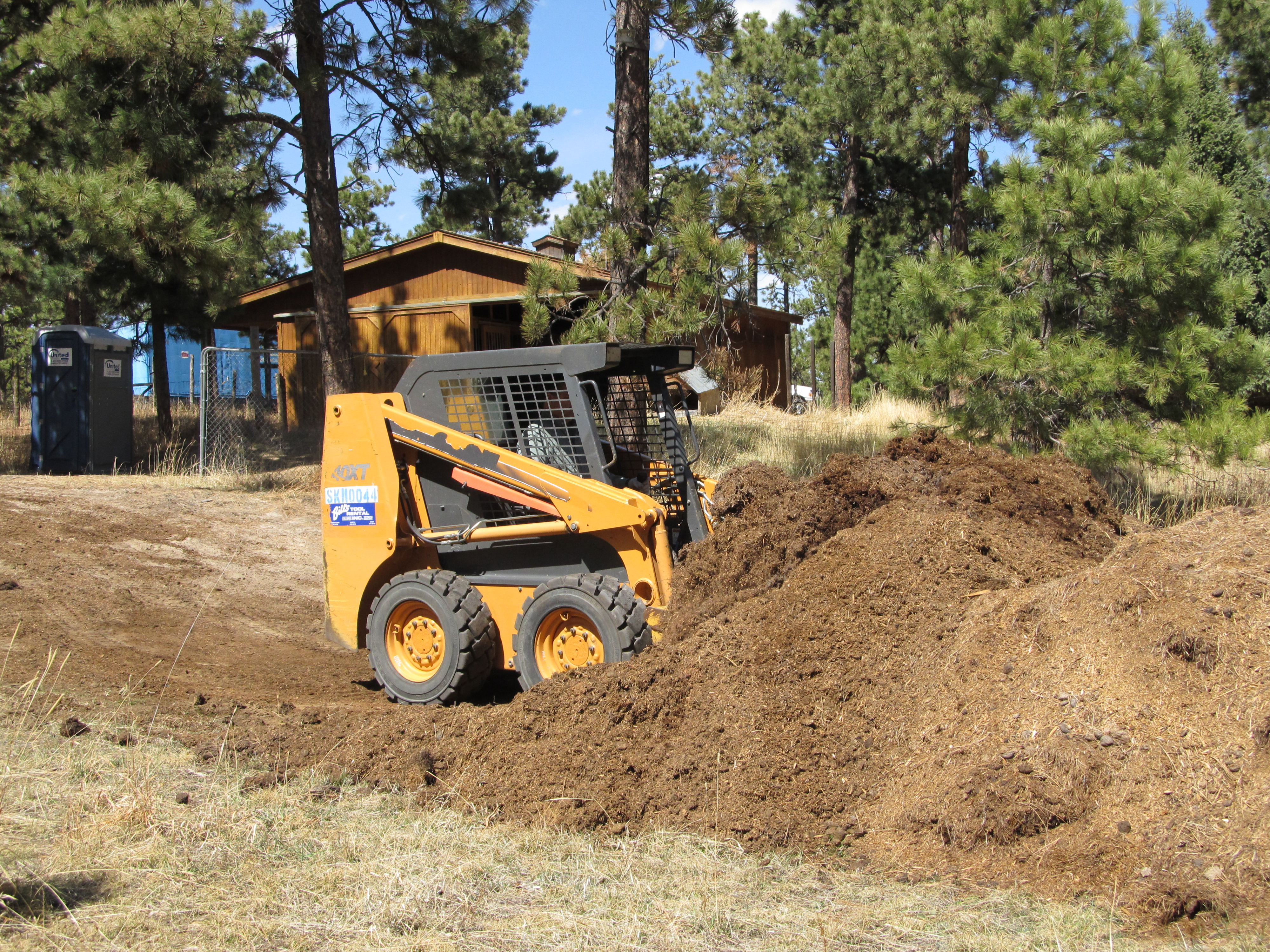
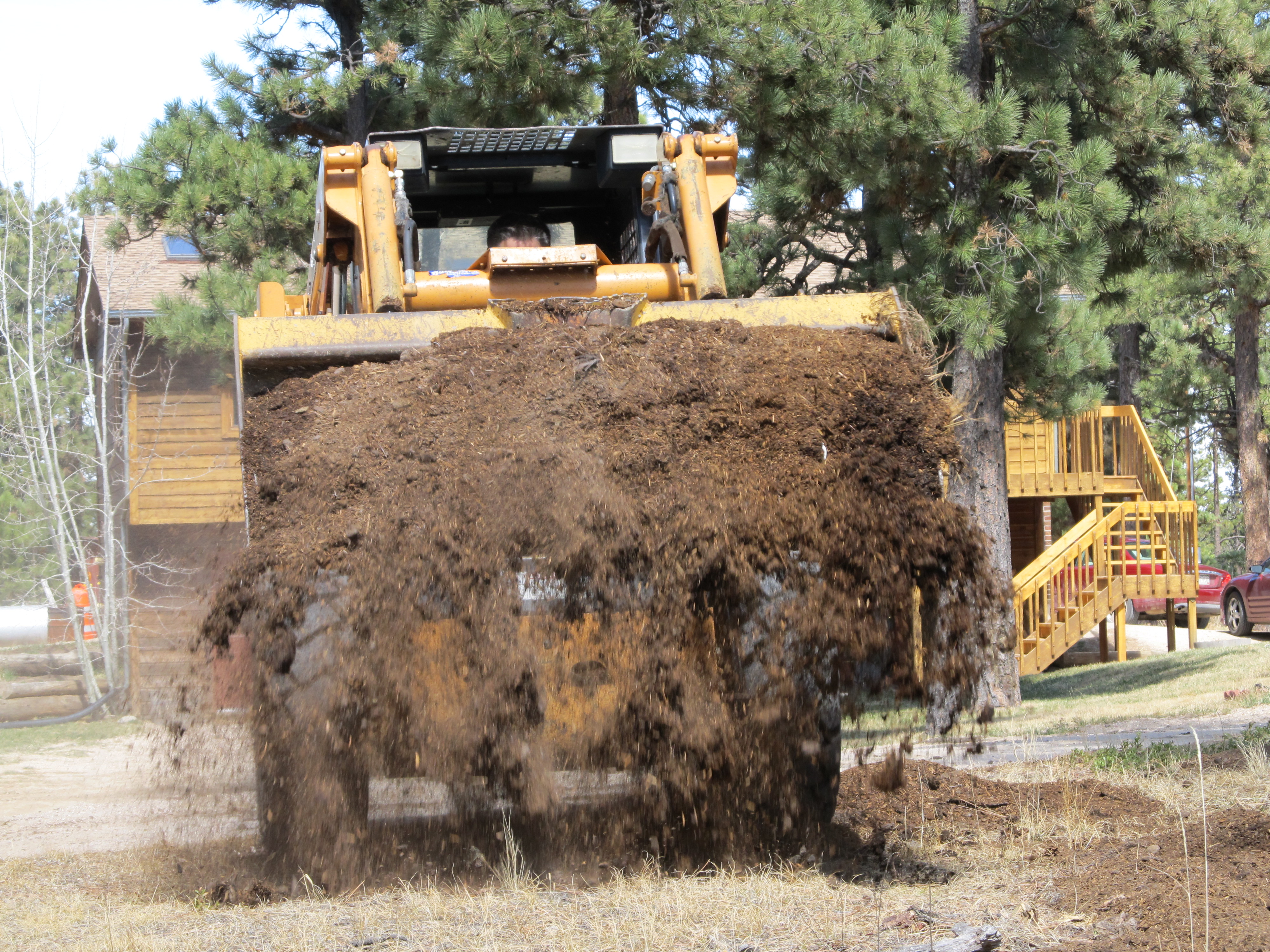
Jim Scooping Up Our Treasured Fertilizer

Why does it seem these Spring days are flying by significantly faster than those Winter days were?  There is so much work to complete in order to have a successful crop in a few months!  You can catch a glimpse of our farmers during nice, quiet, sunny Spring days in Leona’s journal.  Disking, applying herbicide, fertilizing, and seeding – all going on within two days!  Today Jim and I spread horse manure – composted, several years old horse manure – across our acreage.  Since we live in a sandy, semi-arid forest, this aged horse manure is like spreading a layer of top soil across our yard.  However, since we’re in the process of selling our house, we’ve discovered that not everyone is ready for living in the Black Forest.  One offer we received included “horse manure will be removed” in their additional stipulations for purchase.  Why would anyone request that something so valuable to the land be removed?  Perhaps it’s because just the thought of “horse manure” creates negative connotations – smelly, disgusting, germ-infested connotations.  And yet, every competent farmer recognizes the exceptional value of nutrient-rich land, as well as the many chores of Spring preparation.

Real life and relationships are similar in that there are certain components – we’re calling them Basic Skills – that are exceptionally valuable in preparing for success.  Our first vital skill was the concept of boundaries, that is, knowing where your farming responsibilities actually begin and end.  Our second skill is communication.  It’s a little ironic that we are comparing horse manure with communication since we often dismiss verbiage from certain folks as “b.s.”  The communication we’re discussing is that which provides rich nutrients for healthy, strong relationships and daily interactions.  The comparison that I do want to make is that just like our prospective house buyer found little value in the horse manure, many individuals believe there to be little value in communication, particularly if the conversation needs to be difficult, emotional and involving conflict.  It is these “smelly, disgusting” (to borrow adjectives from our manure description) and challenging conversations that generate the most life and profitable future.  Certainly there are plenty of mundane conversations necessary for day-to-day life, but the difficult ones can’t be replaced or ignored in hopes of things just working out for the better.

Much has been written about the importance of conversation and effective communication skills.   One caution addressed by Gregory D. Cash, President & CEO of Vasomedical, Inc., in The Way to the Top: The Best Business Advice I Ever Received (2004, Trump) is communicate with care.  Cash specifies two guidelines including “The Size of the Canon” and “The 24-Hour Rule.”  He indicates that one must bear in mind the position and influence a speaker has when communicating.  Those with more influence come through with a bigger bang than those with less.  Although he is referring to corporate hierarchy, the same is true in family life and in relationships.  For example, a child can be significantly influenced by remarks – positive or negative – from his or her parent, while the same remarks from a stranger or peer may have little to no power.

“The 24-Hour Rule,” according to Cash, is to allow 24 hours before responding to any communication that generates an emotional response.  In this day and age of “IM-ing,” texting and emails, this caution can save many foolish remarks, thus preserving relationships and employment.  In a face-to-face conversation, delaying one’s response 24 hours may not be appropriate, but it certainly wouldn’t hurt to take some time to think and process before replying.

Planned Placement Yields the Best Results

All of the disking, fertilizing and seeding our farmers are busy completing must be performed within the appropriate boundaries and done with care.  So, too, our communicating.  Simply stated, some words can be spoken to certain people and not to others.  If John or Jim were to just wildly disk wherever they wished, the coming crop would be damaged and the neighbors certainly maddened.  Sometimes we carry on conversations – important, vital conversations – as if we can disk wherever we want, saying whatever we want, however we wish, in whatever manner suits our present mood.  Then we wonder why the fence posts are ripped out of the ground, why people are angry with us, and why there’s such a mess everywhere.  Or perhaps we spray the Treflan, a powerful herbicide, everywhere and then blame someone else that nothing grows in our field.  An honest, accurate assessment is that we did not communicate with care.  We gave not a single thought to wanting to have a harvest in a few months, a harvest of enjoyable holidays with our family or happy memories with our friends.  We only thought that we “felt” like saying what we said and we were entitled to say whatever we wanted, however we pleased.

Remember Those Victory Gardens? Mine Gets Some Fertilizer -- And An Inspection by Buster!

If that’s how you choose to farm your land, you must be prepared for the ramifications of your decisions.  However there are better ways to farm, much more effective means to prepare for a fruitful harvest.  In my next blog, I’ll give you some “cheat sheets” for better communication.  But for now, here is one helpful link to Communication Boundaries that will encourage you to communicate with care.

Grain of Truth: Keep your harvest goals in mind during these early days of spring preparation.  Respect boundaries and communicate with care.


Success is Launched in Winter – Part 4

2 03 2011


Sessions with the Farmer’s Wife:
Conventional Wisdom for Contemporary Life

February 18, 1984:  In afternoon, Jim and Karla went to Selmer and Ann to look at the 2 houses. Their conclusion was that they would like to live in the larger one.
February 20, 1984: John and I had noon lunch with Selmer & Ann & presented them an offer on their property on the corner a mile east. They will be considering it further.       
– Leona, Personal Journal

Jim installed laminate in much of our house

I hope you’ve been making good use of the many Winter days that have clipped by since I last wrote.  Although I had hoped to give you a few days to contemplate and make use of the earlier entries, I never intended for it to be nearly two months!  Jim and I really made the most of this actual Winter season in that we refurbished much of our house in preparation of selling it; we looked at other houses and made an offer on a short sale; we took a week-long vacation to Jamaica; and we’ve been helping with long-distance wedding plans for Anthony and Corinne who will be married in 10 days!  So although there has been no time for writing, we have been truly practicing what we preach.  And since most old photographs are packed away in a big blue trailer in hopes of moving, I’ll share some of our latest pictures instead.

Jim & I scuba diving off Jamaica

I originally mentioned 5 components to launching success.  They are:
        1. Reflect
        2. Evaluate
        3. Investigate
        4. Plan
        5. Prepare
My family has been weaving in and out of all of these phases with the various projects we’ve been making.  Today’s focus is on stages 3 & 4, Investigate and Plan. 

Leona’s journal entries are from 1984, the year Jim and I were married.  With our firstborn son’s wedding only moments away, it seems curious and appropriate that we revisit the year we were married.  Our wedding was April 14.  In February — the dates of these entries — Jim and I were at Iowa State University working on our degrees.  When we completed college in May, we planned to return to Jim’s family’s farm and begin our life there.  In order for that to happen, Jim’s parents were investigating options for us to live.  The housing market in Iowa — unlike what we face here in Colorado Springs — is really quite limited, so for there to be an acreage just a mile down the road available at this moment in time was quite fortunate.   That acreage is still owned by the farm corporation, although both of the houses that we looked at in 1984 are gone and Leona lives there in a house she and John built in the 1990s.

If you could peruse the Winter months in Leona’s other journals, you would read again and again of the farmers investigating and planning.  Winter is when the seed dealers host dinners to inform the farmers of the new seed varieties that are available for planting.  There are negotiations for buying and renting land, and also for doing custom farm work.  Machinery shows display the newest and the best of what they have to offer, as well as presenting the latest inventions to make farming more efficient.  Indoor arenas are swamped with swarms of Carhartt-clad farm families attending the annual farm exhibition demonstrating everything from the latest farm-focused computer programs to quarter million dollar combines.  All of these activities are the investigation and planning processes that are really only appropriate for Winter.  Once Spring planting hits, there are no farm shows.  You don’t have time to be buying and selling land or houses either; it would be foolishness.  But Winter, much can be learned and discovered in Winter.  Lives can change if you use the Winter of your life well.

How do these investigating and planning phases translate into real life?  First off, you need to make a few decisions about where you’re heading or at least choose some options of what you’re interested in doing.  Farmers farm, of course, so there’s a default that already provides direction for them.  But farming is very broad.  Will you raise livestock?  What crops will you plant?  Do you want to do custom work or have someone rent your land?  Many people get discouraged because they aren’t going anywhere, but if you ask them where they want to go, they have no idea.  Think of how discouraging it would be for a farmer to get to early June — a time considered nearly too late to plant — and have all bare fields because he never stopped in Winter to consider what he wanted to do with his land.  He would be laughed at by everyone.  And if no one bailed him out somehow, he likely would have no income or food for an entire year.  The same is true for those of us who are of the none-farming variety.  If you don’t have a place you intend to go, you won’t get there.  Guaranteed.

Paths of Choices

I give clients the simple arrows diagram you see here, Paths of Choices. (Click here for a .pdf version: Paths of Choices (WhiteArrows).)  The goal is to start at the top — the Results.  Decide where you want to go.  Once you determine your goal, go back to the bottom and determine, step-by-step, how to get there.  You see there is both a Foolish Choices Path and a Wise Choices Path.  Sometimes realizing where we’re heading with the foolish decisions we make will help us discover where we really want to go.  All along the Wise Choices Path, a person should investigate and gain new knowledge and information.  Just like with farming, things are always changing; there are always new options, but just because the option is “new” doesn’t mean it is actually “wise.” 

What looked to be a long, cold, dreary Winter is nearly over!  Make use of these last few days of cold, snow-laden Winter to get your mind and heart and life in order.  I’m hearing reports of robins!  They’ll be showing up in your life soon enough, too!

Grain of Truth: Don’t be deceived by Winter’s final cold days!  There are plenty of information to investigate and direction to decide before the planting days arrive!


Success is Launched in Winter – Part 3

8 01 2011

Sessions with the Farmer’s Wife:
Conventional Wisdom for Contemporary Life

“Grieving allows us to heal, to remember with love rather than pain. It is a sorting process. One by one you let go of things that are gone and you mourn for them. One by one you take hold of the things that have become part of who you are and build again.”  — Rachel Naomi Remen, In Worden, 2009

Our last visit to Grandpa's farm before his death (July, 2009)

As I’ve been thinking about reflecting and evaluating, it occurred to me that oftentimes we look back with sadness, disappointment and grief about the past. Although today’s quote is not taken from Leona’s journal, it is not that Leona has not faced grief, but because I do not have last year’s journal in my possession. Leona – and all of our family – faced quite a season of grief beginning on August 30, 2009, when Leona’s husband, John R, my dad-in-law, died suddenly from a massive heart attack. Within the next 5 months, 3 more siblings of either John or Leona passed away, and our families were thrown into what felt like a perpetual season of grief.

Although we often correlate grief with the death of a loved one, in actuality many situations create a season of mourning. Grief comes from loss of opportunity (perhaps a feeling of deep disappointment), from loss of natural experience (such as “growing up too fast”), or from loss of something important to us (a job or a home, for example). Persons who are molested or abused lose their innocence and their safety. Society seldom recognizes these losses as moments of mourning, resulting in unresolved grief.

As you reflect and evaluate, it is important to scan for moments of unresolved grief in your earlier seasons. Are there people you love who are no longer with you – whether from death or from circumstances? Has the loss of employment, your home, your career, your hopes and dreams left you empty and numb? Are there memories haunting you that remind you every moment to not trust, to not hope, to not allow others into your world? If so, you may be dealing with unresolved grief.

J. Eric Gentry, PhD, LMHC, knowledgeable and highly respected traumatologist (www.compassionunlimited.com) has compiled information and exercises to assist a person processing through grief and mourning, whether as the result of a loved one’s death or countless other painful experiences. He indicates that grief and mourning has several “tasks” and lists them as:

         1. Accept the Reality of the Loss
        2. Process the Pain of Grief
        3. Adjust to a World without the Deceased (Object)
             a. External Adjustments
            b. Internal Adjustments
            c. Spiritual Adjustments
        4. Find an Enduring Connection with the Deceased in the
             Midst of Embarking on a New Life

If a person gets “stuck” in these tasks, the grieving process is unresolved or incomplete, which can hinder and handicap a person from moving forward in a healthy and productive manner. Don’t be mistaken, anyone who faces grief will forever be changed. This change does not need to be a debilitating force, but can transform into a life-producing energy.

Below is one exercise that may be beneficial to move you through these tasks. Please keep in mind that grieving is a very personal process and one that usually takes longer than anyone wishes it would. It is also a cyclical process where you come around again and again to address what feels like the same thoughts, feelings, and emotions. I call that the onion-layer effect; each time going a little deeper.

Also know that the past will always be with us, whereas this moment is fleeting. What I mean is be in charge of how you process and work through experiences from previous seasons. Take it a few minutes at a time. It may be helpful to use a notebook and a shoebox. Keep a brief record of your thoughts and ideas as you process through these difficult things. When it gets to be emotionally enough or when it is time that you need to get back to your present life, put your notebook in your shoebox. Set it on a shelf in your closet and close the door. Tell yourself, “I’ll come back to that when I’m ready. Right now, I’m going to live and enjoy my life.”

While this exercise is directed toward a loved one’s death, it is beneficial in processing grief from other situations; adjust the process to fit. Take time to feel, express, and be finished with the emotions and thoughts of grief.

      Write a letter to the deceased addressing the following four tasks:
         
1.  Identify all the ways in which the deceased/lost caused you harm; 
                 move toward forgiveness.

          2.  Identify all the ways in which you caused the deceased/lost harm;
                move towards amends.

          3.  Articulate all the un-communicated emotional statements.
          4.  Say good bye.

John R's Funeral Flowers

    Sometimes taking an honest look back on the past seasons uncovers difficult and painful information. No one ever died from pain, so don’t be afraid of it. Also, don’t allow it to overwhelm you and prevent you from heading into the next season. On the farm, death is a normal, natural component to every growing season. If we take time during the Winters to clean up from last year, we’ll be better prepared for the next growing season, which really isn’t that far off. In order for us to launch success, Winter requires some difficult work.

Leona (right) with 4 of the Remaining Siblings - at the Time (She and her 2 sisters married John R and his 2 brothers. They've lived on their respective farms within 3 miles of one another ever since.)

As we conclude, I want you to know that I am sorry for all of the losses you’ve experienced. Leona and I both understand completely. You’ve done good work today.

Grain of Truth: There are tasks of grieving and mourning that, although difficult to process through, will help launch success in the next growing season.


Success is Launched in Winter – Part 2

2 01 2011

Sessions with the Farmer’s Wife:
Conventional Wisdom for Contemporary Life

January 2, 1993:  Cloudy morning with brisk south breeze. I was dizzy and somewhat nauseated when I got up. John climbed up on the roof to check sewer vent and found it to be plugged. Aired house out well. Kind of wondered if there might have been a connection. Feeling much better by noon.  – Leona, Personal Journal

Leona’s journal entry for the day may seem a little odd in our discussion, and yet I find it to be a perfect example of real life problem solving, which includes our first two topics for launching success: 1) reflect, and 2) evaluate. We can’t be certain, Leona isn’t even certain, but it is quite possible that because of her reflection and evaluation (followed by John’s investigation and action) that quite a problem was averted and “productivity” was maintained. These are exactly what Winter times of contemplation are all about.

My farmers need to use their reflecting and evaluating skills.

It is rather difficult to reflect, or review the past, without simultaneously evaluating the events and decisions we’ve made. Care need be taken during this process, otherwise it is easy for some folks to critique their past with the 20/20 vision they have at the present. I once heard a counselor friend say that it is unfair to judge our past assessments with our present knowledge. We make the best decisions we can with the information we have at the time. We all would have made different choices if we knew the exact results and how every situation would play out. We simply don’t have that luxury.

During the reflection and evaluation process, a farmer critiques a countless number of factors:
        *What brand and type of seed did I use?
        *Should I tile that wet spot on the East Quarter?
        *Was it the herbicide burning the beans that cut productivity?
        *Was the combine running efficiently enough or is it time to trade
                 it in?
        *Do I have enough cash flow to invest in a new piece of ground or
                 equipment or a hired hand?
        *Did I market my grain at a good time or did the prices improve later?
        *Will we get the hail we got last year and was I foolish to not
                have insurance?
The list is literally endless – and oftentimes exhausting. Now you have an idea of what keeps a farmer awake at night!

We have similar questions to ask, answer and evaluate in our worlds.
        *Is this the job for me or should I find something I love to do, even
                if I don’t get paid as much?
        *What more can I do to help my kids succeed, or am I doing too much
                for them?
        *Which friends have proven themselves faithful and a positive
                 influence in my life? Are there some from whom I should
                distance myself?
        *I’ve lost the same 3 pounds 20 times; do I really want to keep
                up that cycle?
        *Is the world around me really as vicious as I interpret it to be or
                are there some things about me that need some attention?
Again, once we get started, another endless list.

Different action plans for the same problem. (That's Anthony tunneling!)

Although this contemplation and reflection process is vital to a successful life, this can work against you if you’re not aware.  Sometimes we start wishing for “the good ol’ times” and derail ourselves from moving forward. We also tend to “bite off more than we can chew.” (Wow, almost too many adages!) However, my biggest concern is shame.

Dictionary.com offers a definition of shame as “the painful feeling arising from the consciousness of something dishonorable, improper, ridiculous, etc., done by oneself or another.” Shame can be an immobilizing force that prevents one from being able to evaluate clearly, and thus, makes one unable to move forward successfully. One of the difficulties of shame is that it may be an accurate indicator that something needs to be changed, or it may be a completely inaccurate sensation that must be eradicated, much like a noxious weed. It is oftentimes ingrained in a person from a very young age, either from parents’ remarks and behaviors (intentional or not) or by the child interpreting events without adequate feedback or understanding. For example, a child of divorced parents may have either been told that he was responsible for the divorce or, because of his inability to comprehend adult interactions, may have taken that responsibility – and the resulting shame – on by his own accord.

I encourage you, as you reflect and evaluate during this New Year, to review your life and your choices from an adult – almost detached – vantage point. Sort through things as if you have been invited to look into someone else’s life in order to give recommendations. Tease out what it “feels like” happened versus what truly occurred. Have you participated in something that brought you shame? If so, stop it – or enlist someone to help you stop — and, as our Christmas Spirituality blog discussed, forgive yourself. If the shame that you live in is not truly your shame to be responsible for, it is time to set yourself free.

This difficult topic is addressed in several great books that you can find online. I recommend the following:

        * Healing the Shame That Binds You
                John Bradshaw
        * Shame and Grace: Healing the Shame We Don’t Deserve
                Lewis B. Smedes
        * Shame and Guilt: Masters of Disguise
                Jane Middelton-Moz

This time of contemplation is not something in which to get utterly bogged down or overwhelmed. Although there may be some difficult ideas to revisit and reframe, we are using the Winter to plan and prepare for life. Just as Leona’s entry describes, if we discover a problem, we’ll take action to correct it, then move forward in our day-to-day adventures!

Grain of Truth: Reflecting and evaluating life is often best accomplished from a somewhat detached, logical vantage point.