Basic Skills: #2 Communicate with Care (Part 2)

5 04 2013

Sessions with the Farmer’s Wife:
Conventional Wisdom for Contemporary Life

April 5, 2005: Partly sunny and the wind is still from the SE. Really warming up quickly.                                              — Leona, Personal Journal

Have you been waiting around for 2 years for those “cheat sheets” for better communication that I promised? Wow! It’s hard to fathom that 2 entire years have passed since my last official blog! Let me try to catch you up on what’s been happening behind the scenes.

My 50th birthday was on St. Patrick's Day. Well, actually all of my birthdays have been!

My 50th birthday was on St. Patrick’s Day. Well, actually all of my birthdays have been!

Last I posted, Anthony and Corinne had just gotten married, and Jim and I were in the throes of selling one house and buying another. That new house was a short sale which had been neglected for years. We spent months cleaning, scrubbing, painting, fixing, replacing…just to get it into livable condition. In that process, I burned out my arms and shoulders and was actually diagnosed with “overuse syndrome.” I am just now nearly fully recovered, after two years of physical therapy, chiropractic treatments, acupuncture, dry needling, muscle relaxers, pain relievers, exercise, and massage.

Three weeks after we moved, we had a big party at our new place celebrating Jozlyn’s high school graduation. We planted a garden, worked at getting settled, moved Andrea to a horse ranch and a new college, moved Jozlyn off to college — when it seemed we were already upon Thanksgiving and Christmas with lots of family and festivities going on. Andrea resigned her horse ranch job which meant moving back in with Mom and Dad and will be finishing up her business degree in a few weeks.

Monica said, "Yes!"

Monica said, “Yes!”

The morning of Marcus’ college graduation, he proposed to his lovely Monica. Marcus is an engineer in Texas and Monica is a kindergarten teacher in Texas, although not in the same city! They are looking forward to being married this June.

Alabama Trip family -small

We gathered the whole gang at the beach for a few days!

We’ve also taken a couple family vacations together, made a few trips back and forth to Iowa to visit and care for our parents, and also made a couple trips to Alabama to hang out with Anthony and Corinne.

As if this hasn’t been enough, Jim and I both actually have jobs! Jim has been promoted to regional administrator and is now overseeing five home health care agencies from Pueblo, Colorado Springs, Denver, and up to Fort Collins. That’s a 3 hour drive from bottom to top, so he’s on the road more.  I continue my private practice and have also launched Soul SafetyTM and created DVDs, a CD of my original songs, and some written resources to promote emotional well-being within faith communities. If this sounds interesting to you, you can check out www.soulsafety.com.

It seems that things have settled enough for me to get back to what we were doing here at Sessions, so let’s get going on Part 2 of Communicating with Care!

The 2012 fires were within view from our house. Good communication is imperative at a time like this!

The 2012 fires were within view from our house. Good communication is imperative at a time like this!

When communicating, listening, rather than speaking, is oftentimes the bigger problem. No matter how well-spoken a person is, if the intended recipient does not listen well, communication does not happen. Many people interrupt, talk over, disqualify, ignore, or never even notice another person speaking to them. You’ve heard it said that many don’t hear what’s being said because they’re so busy formulating what they want to say to make their point. That doesn’t contribute to good listening and quality communication at all.

One of the best solutions to poor communication is called the Speaker-Listener Technique. With this approach, the Listener is not allowed to make his point until he has proven that he heard the Speaker by reflecting – accurately reflecting back to her what she said until she is satisfied that he is comprehending and understanding her point. At that time, the Listener becomes the Speaker and may make his point. While practicing this model of communication, it is very helpful for the person speaking (which is not always the Speaker), to hold an object that identifies that he or she has the floor. Some families have a Talking Stick, although any noticeable object would work.  Additional rules of communication beneficial to any discussion are available at http://www.positive-way.com/family.htm. Although the slower pace of the Speaker-Listener Technique is frustrating for some, the benefits of slowing down the conversation, taking adequate time to be understood, and managing emotions that tend to escalate, far outweigh the previous manner of communicating which wasn’t really communication and oftentimes led to hours…days…weeks of hurt feelings and animosity between people.

An important aspect of this or any model of communicating is using “I Statements” or speaking for oneself. None of us actually knows what another person is thinking; we regularly have no idea what we’re thinking! Quality, effective communication requires that I take responsibility for my own thoughts and feelings, then endeavor to make them known outside of myself in an efficient manner. Here is fill-in-the-blank assistance to get you started:

I feel ____________
(when you do/do not __________)
because ____________
and I would like you to (stop) ____________.

If you give this a test run, I think you might be surprised what problems this little exercise solves, especially if you couple it with the Speaker-Listener Technique.  I suspect it might prove to be like the south-east wind on a partially sunny April day that Leona mentions in her journal – things might really warm up quickly!



Basic Skills: #2 Communicate with Care (Part 1)

9 04 2011


Sessions with the Farmer’s Wife:
Conventional Wisdom for Contemporary Life

April 9, 1986: Nice day! John started disking set-aside acres on Roberta’s quarter.  I did some yard work.  Anthony here awhile in evening when kids went to play volleyball.
April 10, 1986: A super nice day, quiet & sunny. Guys put Treflan on set-aside acres on Roberta’s quarter and then began spreading fertilizer (liquid) with alfalfa seed in it; didn’t get finished with the seeding job. I had Anthony while the others went to men’s chorus and choir practice. 
                                                                             – Leona, Personal Journal

Jim Scooping Up Our Treasured Fertilizer

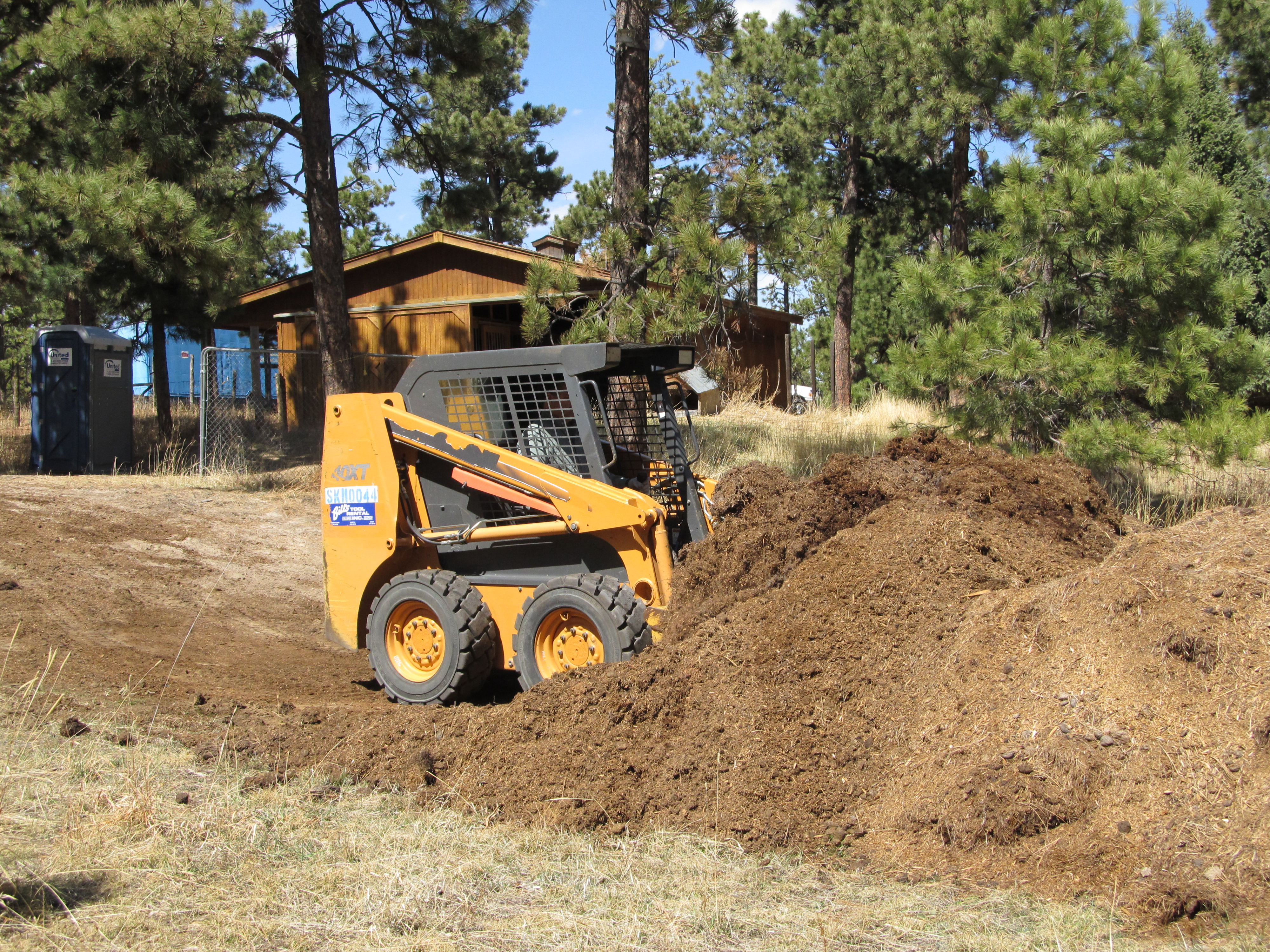
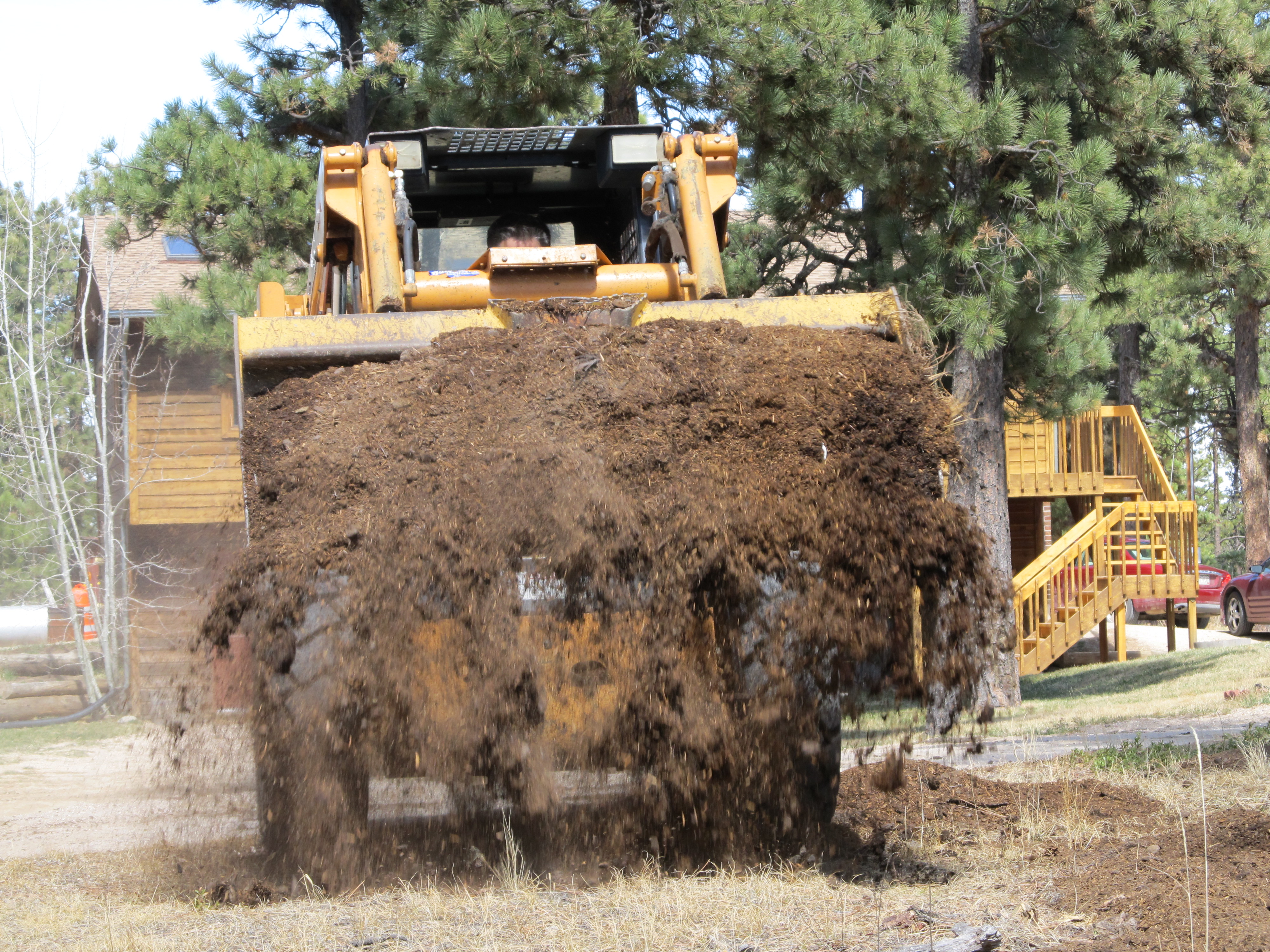
Why does it seem these Spring days are flying by significantly faster than those Winter days were?  There is so much work to complete in order to have a successful crop in a few months!  You can catch a glimpse of our farmers during nice, quiet, sunny Spring days in Leona’s journal.  Disking, applying herbicide, fertilizing, and seeding – all going on within two days!  Today Jim and I spread horse manure – composted, several years old horse manure – across our acreage.  Since we live in a sandy, semi-arid forest, this aged horse manure is like spreading a layer of top soil across our yard.  However, since we’re in the process of selling our house, we’ve discovered that not everyone is ready for living in the Black Forest.  One offer we received included “horse manure will be removed” in their additional stipulations for purchase.  Why would anyone request that something so valuable to the land be removed?  Perhaps it’s because just the thought of “horse manure” creates negative connotations – smelly, disgusting, germ-infested connotations.  And yet, every competent farmer recognizes the exceptional value of nutrient-rich land, as well as the many chores of Spring preparation.

Real life and relationships are similar in that there are certain components – we’re calling them Basic Skills – that are exceptionally valuable in preparing for success.  Our first vital skill was the concept of boundaries, that is, knowing where your farming responsibilities actually begin and end.  Our second skill is communication.  It’s a little ironic that we are comparing horse manure with communication since we often dismiss verbiage from certain folks as “b.s.”  The communication we’re discussing is that which provides rich nutrients for healthy, strong relationships and daily interactions.  The comparison that I do want to make is that just like our prospective house buyer found little value in the horse manure, many individuals believe there to be little value in communication, particularly if the conversation needs to be difficult, emotional and involving conflict.  It is these “smelly, disgusting” (to borrow adjectives from our manure description) and challenging conversations that generate the most life and profitable future.  Certainly there are plenty of mundane conversations necessary for day-to-day life, but the difficult ones can’t be replaced or ignored in hopes of things just working out for the better.

Much has been written about the importance of conversation and effective communication skills.   One caution addressed by Gregory D. Cash, President & CEO of Vasomedical, Inc., in The Way to the Top: The Best Business Advice I Ever Received (2004, Trump) is communicate with care.  Cash specifies two guidelines including “The Size of the Canon” and “The 24-Hour Rule.”  He indicates that one must bear in mind the position and influence a speaker has when communicating.  Those with more influence come through with a bigger bang than those with less.  Although he is referring to corporate hierarchy, the same is true in family life and in relationships.  For example, a child can be significantly influenced by remarks – positive or negative – from his or her parent, while the same remarks from a stranger or peer may have little to no power.

“The 24-Hour Rule,” according to Cash, is to allow 24 hours before responding to any communication that generates an emotional response.  In this day and age of “IM-ing,” texting and emails, this caution can save many foolish remarks, thus preserving relationships and employment.  In a face-to-face conversation, delaying one’s response 24 hours may not be appropriate, but it certainly wouldn’t hurt to take some time to think and process before replying.

Planned Placement Yields the Best Results

All of the disking, fertilizing and seeding our farmers are busy completing must be performed within the appropriate boundaries and done with care.  So, too, our communicating.  Simply stated, some words can be spoken to certain people and not to others.  If John or Jim were to just wildly disk wherever they wished, the coming crop would be damaged and the neighbors certainly maddened.  Sometimes we carry on conversations – important, vital conversations – as if we can disk wherever we want, saying whatever we want, however we wish, in whatever manner suits our present mood.  Then we wonder why the fence posts are ripped out of the ground, why people are angry with us, and why there’s such a mess everywhere.  Or perhaps we spray the Treflan, a powerful herbicide, everywhere and then blame someone else that nothing grows in our field.  An honest, accurate assessment is that we did not communicate with care.  We gave not a single thought to wanting to have a harvest in a few months, a harvest of enjoyable holidays with our family or happy memories with our friends.  We only thought that we “felt” like saying what we said and we were entitled to say whatever we wanted, however we pleased.

Remember Those Victory Gardens? Mine Gets Some Fertilizer -- And An Inspection by Buster!

If that’s how you choose to farm your land, you must be prepared for the ramifications of your decisions.  However there are better ways to farm, much more effective means to prepare for a fruitful harvest.  In my next blog, I’ll give you some “cheat sheets” for better communication.  But for now, here is one helpful link to Communication Boundaries that will encourage you to communicate with care.

Grain of Truth: Keep your harvest goals in mind during these early days of spring preparation.  Respect boundaries and communicate with care.


Basic Skills: Respecting Fences (Part 1)

27 03 2011


Sessions with the Farmer’s Wife:
Conventional Wisdom for Contemporary Life

March 26, 1981: John worked Ellerbroek quarter & then moved to Callenius land south of highway.  Jim had early jazz band practice & then came home to run some errands for John & help unload some seed beans.             – Leona, Personal Journal

Why do generic photos elicit such strong memories & emotions?

Every year I was in elementary school we were required to take a standardized test called the Iowa Tests of Basic Skills.  With a title like that, it’s no mystery what the purpose of the tests was – to see how competent students were at what was (and still is) considered basic skills of education.  Today we begin a series of what I deem to be the basic skills of life.  Lack of knowledge, understanding or performance of one or more of these foundational concepts is what oftentimes introduces me to my clients.  Just like knowledge is far more complex than what was assessed on the ITBS, living life well is far more complicated than just these ideas.  However, if you gain proficiently in these basic skills, many aspects of life are much easier than they would be without that ability.

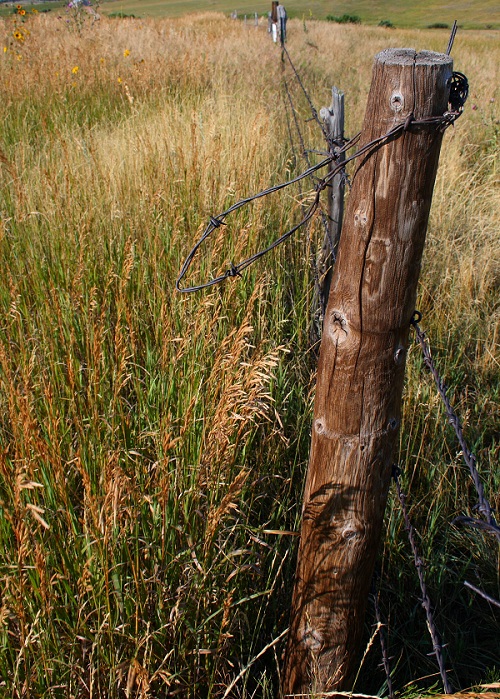
Today’s concept number one is what is commonly referred to as boundaries.  Boundary issues get us into all sorts of confusing and convoluted conversations, conditions and circumstances.  Perhaps the best resource for this discussion is the book Boundaries (2001) by Drs. Henry Cloud and John Townsend.  They state, “Boundaries define us.  They define what is me and what is not me.  A boundary shows me where I end and someone else beings, leading me to a sense of ownership.”  A simple farm analogy is the fence.  Fences do the exact same for farmers that boundaries do for individuals.  As you can see in Leona’s entry, John was driving his farm equipment around two pieces of land that are named, have location, and have specific dimensions.  Although this entry is from 1981, I guarantee you that we could travel to northwest Iowa this afternoon and find these exact same tracts of land.  Even if the fences are different or gone, the boundaries are exactly the same – 30 years later.

This Old Fence Still Makes Its Intentions Known

Here are a few principles to take away from this farming analogy:
1)  The fence line – or boundary – gives definition as to where the farmer is supposed to be, where his farm begins and ends.
2)  The fence line provides freedom for the farmer to do what he wants with his own land.
3)  The fence line provides safety and security since government and legal entities will intervene if anyone violates the farmer’s land.
4)  The fence line encourages responsibility by the farmer for his land to select seeds, fertilizer, herbicides, tillage, weed treatment and many other options for his crop.  He has the right to do nothing or something else with his land, as long as his choices don’t violate land regulations and zoning.
5)  The fence line prevents encroachment attempts and disputes, thus providing peaceful farming.
6)  Peaceful farmers encourage a safer, more strongly connected community.
7)  Fence lines provide some protection for our land and our crops.  Driving across a section of land isn’t such a great idea once you run into a fence.
8)  If the farmer wants someone else on the land, he can either open the gate for them or give them permission to be on his land.

What other principles can you assimilate from this farming analogy of fences?  I encourage you to go back through this list and read them one by one, then make the translation from the farming idea to your life.  For example, #1: The fence line gives definition as to where the farmer is supposed to be, where his farm begins and ends.  Are you aware, as an individual, where you are, where you begin and where you end?  Are you aware of who you are not and who is not you?  If not, I expect you are telling someone else how to live their life while you pay very little attention to how you are living your own life.  Or, perhaps someone else is telling you how to live your life and you take no responsibility for your own existence.  Your fences are down; you need to take some measurements and rebuild them.

While some fields have strong solid fences, occasionally more secure than what a corn field really requires, a lot of fields have no fences at all.  These are both boundary concerns.  One has too many limitations; the other doesn’t have enough.  Cloud and Townsend identify four types of boundary problems:

1. Compliants: These folks say “yes” to the bad; their gate swings open to everything. Often because of the fears related to saying, “No,” Complaints suffer much turmoil.  Once they are given permission to express their disagreement or dislike, Compliants can gain possession of their personal property – their own life!
2. Avoidants: A brick wall approach creates the opposite issue, saying “No” to the good!  Avoidants don’t let anyone in to their life. They may be unable to ask for help or to recognize their own needs.  Avoidant behavior is often taught through the example of parents or learned as a survival skill from an abusive life.
3. Controllers: These people have an opinion about everything and intend to have everyone know and follow their preference.  You can scream, “NO!” at a Controller, and he or she will just keep right on as if you never made a sound.  Somehow, they are responsible for everyone’s life – everyone’s but their own!
4. Nonresponsives: A Nonresponsive cannot hear, see or accept the needs of anyone else.  They tend to be completely self-absorbed with no intention of realizing or succumbing to the wishes of anyone else.  They don’t need you to do anything; just don’t bother them with your “trivial” preferences or problems.

My Flowers are Doing Their Best to Work with Spring!

There are a couple more ideas I’d like to present before we move on to the next basic skill, but this is plenty to chew on for today.  Take some time to go back through these ideas.  I expect everyone has a boundary issue of some sort in his/her life at one time or another.  How does all of this relate to you, your life, your relationships?  Are you a “boundary problem”?  If so, it’s a great time to get these fence lines measured out.  That’s what early Spring is all about – getting everything in line so we can do our best to sow a bumper crop this year!

Grain of Truth:  Boundaries define what is me and what is not me.  A boundary shows me where I end and someone else beings, leading me to a sense of ownership.