
Sessions with the Farmer’s Wife:
Conventional Wisdom for Contemporary Life
March 31, 1988: Cloudy and windy. John & Jim measured some set aside acres. –Leona, personal journal
Often when a person discovers a new idea, he will take the idea and run with it, as they say – sometimes a little overboard. This is true of the discovery of the concept of boundaries. All of a sudden, “No one is going to walk all over me anymore!” or “I’m not letting anyone tell me what to do again!” While this type of response is just part of the learning process, it is important to mention that many times it is just fine to do what another person requests or even to not have an opinion about some situation. Another topic that has received a similar response throughout the mental well-being communities is the concept of “co-dependence.” Although co-dependence is a topic for another day, I present this link for your consideration regarding co-dependence and, if you can transpose the debate presented, boundaries. How the Co-dependency Movement is Ruining Marriages (Willard F. Harley, Jr.) http://www.marriagebuilders.com/graphic/mbi8110_cod.html
Remember that fences and boundaries can fluctuate and adjust, but first they must be established. Even Leona’s journal gives indication that the land boundaries were adjusting this year. “Set aside acres” were portions of a field that were not used for typical farming, but were “set aside” because of enrolling in a government subsidized program. (That sentence has hours of heated political debate and discussion rolled into it, but since that’s not our concern presently, I’ll let you Google “set aside acres” if you want to study or debate further.) In 1987, this same piece of ground may have grown corn or soybeans, but in 1988, things were different. Measurements needed to be made and new boundaries, perhaps even additional boundaries, needed to be set up.

A Buffalo Requires More Solid Boundaries
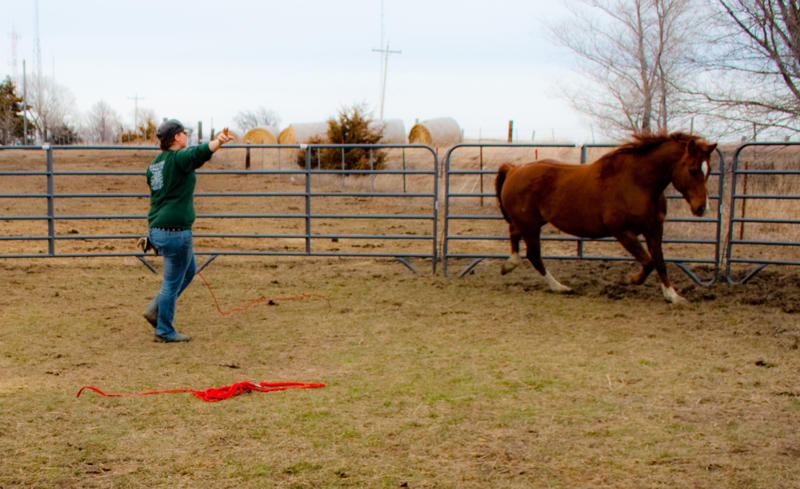
A Well-Trained Horse Respecting Fences
Boundaries in relationships work the same way; occasionally they need to be adjusted. Some folks are like the buffalo in this photo. Notice the strong fences that are built around him and his friends. That type of fence in relationships is created by knowing what we want and sticking to it, no matter what. The gate in this fence is solid and locked tight so no amount off fits and tantrums can break in any closer. If you have a buffalo in your relationships, you better build some strong limits. However, other folks are like a well-trained horse. The round pen in this photo could be knocked over rather quickly if there was an ornery, untrained animal corralled there. But for a person who knows her manners, knows where she ends and you begin, and knows what is or is not hers to influence, a less sturdy boundary with a gently swinging gate is sufficient. Such an analogy begs the question, Am I a buffalo or a well-trained horse?
A few months ago my psychologist sister, my girls and I attended a horse training seminar. I was surprised how many of the ideas taught could be directly transposed for use in relationships. I don’t mean that to sound at all insulting. I think the point to note is that sometimes we are better educated about relating to our animals than we are to the people in our worlds. I’ve never heard of an Obedience Class for Humans. Maybe we’re on to something here.

Relationships Require Training For Both Parties
None the less, there were four points that could be borrowed from the horse seminar and used directly here.
1. Identify Your Personal Space Need: An unruly horse that gets too close to a person is dangerous and potentially deadly.
2. Either Lack of Respect or Fear Causes All Problems: If you teach a horse to respect you and not be fearful, almost all problems will solve themselves.
3. Consistency vs. Inconsistency: A horse will learn it faster and more fluently if you are consistent about what you expect. Inconsistent expectations only confuse.
4. If Difficulties Arise, Deal with the Root Problem, Not the Symptoms: For example, if a horse is infringing on your personal space, he likely has not learned respect for you, which takes us directly back to Point #2.
Can you examine these on your own and translate them into relationships with humans?
Newly established boundaries can cause the new boundary-setter some angst. When you’re used to running rampant anywhere you want, butting up against a fence can upset any creature, usually causing chaos for whoever created the limitation. In order to make this transition as internally peaceful as possible, consider these Boundary Myths from Drs. Cloud and Townsend book, Boundaries. Remember: These are myths, thus, they are NOT TRUE. Each is followed by a tidbit of truth to encourage your newly found boundary-making.
Common Boundary Myths

Simple Fences Gladly Respected
1. If I Set Boundaries, I’m Being Selfish
* Our needs are our job; appropriate boundaries actually increase our ability to care about others.
2. Boundaries Area a Sign of Disobedience
* A Boundary is not a lack of submission, compassion or spiritual depth.
3. If I Begin Setting Boundaries, I Will Be Hurt by Others
* Boundaries are a “litmus test” for the quality of our relationships.
4. If I Set Boundaries, I Will Hurt Others
* Boundaries are not an offensive weapon; they are a defensive tool.
5. Boundaries Mean That I Am Angry
* Boundaries actually decrease anger.
6. When Others Set Boundaries, It Injures Me
* Inappropriate boundaries can injure us.
* An ability to accept others’ boundaries can indicate a problem in taking responsibility.
7. Boundaries Cause Feelings of Guilt
* Just because you receive something (love, money, time) does not mean you owe something.
8. Boundaries are Permanent, and I’m Afraid of Burning my Bridges
* Your ‘no’ is always subject to you.
* Even God negotiated and changed boundaries.

Peace & Safety for Mom & Baby
Although creating boundaries may be a difficult idea to establish, once they are, peace and safety are typical benefits. To investigate these ideas of boundaries further, grab a copy of Boundaries. Next time we’ll dig into the next Basic Skill of communication.
Grain of Truth: Healthy boundaries require effort to establish, but are well worth the challenge with the peace and safety they provide.
All Photos Compliments of Rambling Hearts Photography


 Sessions International
Leave a comment